Author

admin@GS

Browsing

Guru Amar Das Ji was born in the village of Basarke on May 5, 1479. He was the eldest son of Tej Bhan a farmer and trader. Guru Amar Das Ji grew up and married Mansa Devi and had two sons Mohri and Mohan and two daughters Dani and Bhani. He was a very religious Vaishanavite Hindu who spent most of his life performing all the ritual pilgrimages and fasts of a devout Hindu.

It was not until his old age that Amar Das Ji met Guru Angad Dev Ji and converted to the path of Sikhism. He eventually became Guru at the age of 73 succeeding Guru Angad Dev Ji as described previously.

Soon large numbers of Sikhs started flocking to Goindwal to see the new Guru. Datu one of Guru Angad’s sons proclaimed himself as Guru at Khadur following his fathers death. He was so jealous of Guru Amar Das Ji that he proceeded to Goindwal to confront the Guru. Upon seeing Guru Amar Das Ji seated on a throne surrounded by his followers he said; “You were a mere menial servant of the house until yesterday and how dare you style yourself as the Master?”, he then proceeded to kick the revered old Guru, throwing him off his throne. Guru Amar Das Ji in his utter humility started caressing Datu’s foot saying; “I’m old. My bones are hard. You may have been hurt.” As demanded by Datu, Guru Amar Das Ji left Goindwal the same evening are returned to his native village of Basarke.

Here Guru Amar Das Ji shut himself in a small house for solitary meditation. There he attached a notice on the front door saying, “He who opens this door is no Sikh of mine, nor am I his Guru.” A delegation of faithful Sikhs led by Baba Buddha Ji found the house and seeing the notice on the front door, cut through the walls to reach the Guru. Baba Buddha Ji said, “The Guru being a supreme yogi, cares for nothing in the world – neither fame, nor riches nor a following. But we cannot live without his guidance. Guru Angad Dev Ji has tied us to your apron, where should we go now if you are not to show us the way?” At the tearful employment of the Sikhs, Guru Amar Das Ji was overwhelmed by their devotion and returned to Goindwal. Datu having been unable to gather any followers of his own had returned to Khadur.

Guru Amar Das Ji further institutionalized the free communal kitchen called langer among the Sikhs. The langar kitchen was open to serve all day and night. Although rich food was served there, Guru Amar Das Ji was very simple and lived on coarse bread. The Guru spent his time personally attending to the cure and nursing of the sick and the aged. Guru Amar Das Ji made it obligatory that those seeking his audience must first eat in the langer. When the Raja of Haripur came to see the Guru. Guru Amar Das Ji insisted that he first partake a common meal in the langer, irrespective of his cast. The Raja obliged and had an audience with the Guru. But on of his queens refused to lift the veil from her face, so Guru Amar Das Ji refused to meet her. Guru Amar Das Ji not only preached the equality of people irrespective of their caste but he also tried to foster the idea of women’s equality. He tried to liberate women from the practices of purdah (wearing a veil) as well as preaching strongly against the practice of sati (Hindu wife burning on her husbands funeral pyre). Guru Amar Das Ji also disapproved of a widow remaining unmarried for the rest of her life.

Goindwal continued to experience growth as many Sikhs thronged there for spiritual guidance. Pilgrims moved there in large numbers to be close to the Guru. Muslims and Hindus also moved to the thriving town. When there was racial fighting between the three groups and calls for revenge, Guru Angad Dev Ji instructed his Sikhs; “In God’s house, justice is sure. It is only a matter of time. The arrow of humility and patience on the part of the innocent and the peaceful never fail in their aim.”

Once during several days of rain while Guru Amar Das was riding by a wall which he saw was on the verge of falling he galloped his horse past the wall. The Sikhs questioned him saying; “O Master, you have instructed us, ‘fear not death, for it comes to all’ and ‘the Guru and the God-man are beyond the pale of birth and death’, why did you then gallop past the collapsing wall?” Guru Amar Das Ji replied; “Our body is the embodiment of God’s light. It is through the human body that one can explore one’s limitless spiritual possibilities. Demi-god’s envy the human frame. One should not, therefore, play with it recklessly. One must submit to the Will of God, when one’s time is over, but not crave death, nor invite it without a sufficient and noble cause. It is self-surrender for the good of man that one should seek, not physical annihilation. “

With a view of providing the Sikhs with a place where they could have a holy dip while visiting Goindwal the Guru had a type of deep open water reservoir called a baoli dug. As the Hindus believed in reincarnation in 84 hundred thousand species, Guru Amar Das Ji had the well dug with exactly 84 steps. To symbolize that God could be reached through his remembrance rather than just a cycle of reincarnations, he declared that who ever would descend the 84 steps for a bath while reciting the Japji of Guru Nanak at each step would be freed from the cycles of births and deaths.

When it came time for the Guru to marry his younger daughter Bibi Bani, he selected a pious and diligent young follower of his called Jetha from Lahore. Jetha had come to visit the Guru with a party of pilgrims from Lahore and had become so enchanted by the Guru’s teachings that he had decided to settle in Goindwal. Here he earned a living selling wheat and would regularly attend the services of Guru Amar Das Ji in his spare time.

In 1567 while on his way to Lahore the Emperor Akbar decided to visit and see for himself Guru Amar Das Ji. He stopped at Goindwal to meet the Guru, whose teachings he had heard about. The Guru agreed only to seem Akbar if he would first eat in the langer. Akbar agreed, and here the Emperor sat down and ate with the poorest of the poor in his company. Akbar was so impressed by Guru Amar Das Ji that he wanted to give the Guru a parting gift of the revenue collected from several villages to help support the langer kitchen. Guru Amar Das Ji refused saying that the langer must be self-supporting and only depend upon the small offerings of the devout.

The jealousy of the teachings of the Gurus by the high caste Khatris and Brahmins continued. They pleaded with Akbar at the royal court that the teachings of Sikhism would lead to disorder, as they went against the teachings of Hindus and Muslims. Akbar summoned the Guru to his court for an explanation. Guru Amar Das Ji politely excused himself on account of his old age, but sent Jetha to answer the charges leveled against the Sikhs. In the royal court, Jetha explained the teachings of Sikhism. Akbar was open minded and deeply impressed by the religious doctrine of the Sikhs and decided that no further actions were required.

Guru Amar Das Ji continued a systematic planned expansion of the Sikh Institutions. He trained a band of 146 apostles (52 were women) called Masands and sent them to various parts of the country. He also set up 22 dioceses called manjis across the country. These twenty two dioceses helped to spread Sikhism among the population while collecting revenues to help support the young religion. Guru Amar Das Ji also declared Vaisakhi (April 13), Maghi (1st day of Magha, mid January) and Diwali (festival of lights in October/November) as three special days where all the Sikhs should gather to hear the Guru’s words. Although advanced in years, Guru Amar Das Ji undertook a tour of a number of Hindu places of pilgrimage along the banks of the Yamuna and Ganga rivers as well as Kurukshetra. Here the Guru would hold religious services and large numbers of people would come to hear his preaching.

For their religious scriptures Guru Amar Das Ji collected an anthology of writings including hymns of Guru Nanak Dev Ji and Guru Angad Dev Ji and added his own as well as those of other Hindu saints whose poems conformed to the teachings of Sikhism. All of these were in Punjabi and easily understood by the common people. When a learned Brahmin once questioned the Guru; “Why do you impart instruction to your disciples not in Sanskrit, the language of gods in which all the Hindu lore is written, but in their mother-tongue, like Punjabi, the language of the illiterate mass.” To this Guru Amar Das Ji replied; “Sanskrit is like a well, deep, inaccessible and confined to the elite, but the language of the people is like rain water – ever fresh, abundant and accessible to all.” He said; “I want my doctrines to be propagated through every language which the people speak, for it is not language but the content that should be considered sacred or otherwise.”

Seeing the rapid expansion of Sikhism, Guru Amar Das Ji asked his son-in-law and trusted follower Jetha to oversee the founding of another city. He wanted him to dig a tank there and to build himself a house. Jetha first purchased the lands for the price of 700 Akbari rupees from the Zamindars of Tung. Here he started the digging on the tank. This new township called Ramdaspur would in due time become present day Amritsar, the holiest city of the Sikhs.

On September 1, 1574 sensing that his end was near, Guru Amar Das Ji sent for Baba Buddha Ji and other prominent Sikhs including his two sons Mohan and Mohri. He declared; “According to the tradition established by Guru Nanak Dev Ji, the leadership of the Sikhs must go to the most deserving. I, therefore, bestow this honour on my son-in-law Jetha.” Guru Amar Das then renamed Jetha as Ram Das, meaning Servant of God. As was the custom Baba Buddha Ji was asked to anoint the forehead of Amar Das  Ji with the saffron mark. All those present bowed before Guru Ram Das Ji except for Mohan, Guru Amar Das’s eldest son. Shortly thereafter Guru Amar Das Ji breathed his last on the full moon day of Bhadon in 1574 at the ripe old age of 95.

ਜੈਤਸਰੀ ਮਹਲਾ 5 ॥
ਕੋਈ ਜਨੁ ਹਰਿ ਸਿਉ ਦੇਵੈ ਜੋਰਿ ॥
ਚਰਨ ਗਹਉ ਬਕਉ ਸੁਭ ਰਸਨਾ ਦੀਜਹਿ ਪ੍ਰਾਨ ਅਕੋਰਿ ॥1॥ ਰਹਾਉ ॥
ਮਨੁ ਤਨੁ ਨਿਰਮਲ ਕਰਤ ਕਿਆਰੋ ਹਰਿ ਸਿੰਚੈ ਸੁਧਾ ਸੰਜੋਰਿ ॥
ਇਆ ਰਸ ਮਹਿ ਮਗਨੁ ਹੋਤ ਕਿਰਪਾ ਤੇ ਮਹਾ ਬਿਖਿਆ ਤੇ ਤੋਰਿ ॥1॥
ਆਇਓ ਸਰਣਿ ਦੀਨ ਦੁਖ ਭੰਜਨ ਚਿਤਵਉ ਤੁਮ੍‍ਰੀ ਓਰਿ ॥
ਅਭੈ ਪਦੁ ਦਾਨੁ ਸਿਮਰਨੁ ਸੁਆਮੀ ਕੋ ਪ੍ਰਭ ਨਾਨਕ ਬੰਧਨ ਛੋਰਿ ॥2॥5॥9॥

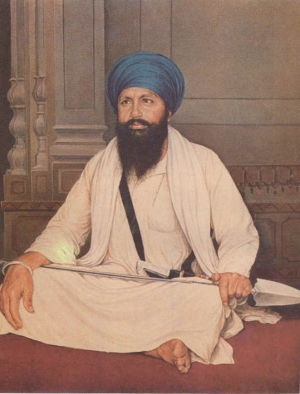
The above Hukamana was taken from Guru Granth Sahib Ji after the birth of Baba Kartar Singh Jee Khalsa in 1932. It summed the exemplary life that Baba Ji lived and practiced. His parents were Mata Labh Kaur & Jathedar Chanda Singh Jee of Village Purane Poore, Tehsil Kasoor in the District of Amritsar. His father, Jathedar Chanda Singh was a great Gursikh of high morals and good discipline.

Baba Kartar Singh Jee was first educated at the Government Middle School Khemharan, 9th & 10th grade were studied at National High School – Bhikhivind, after which further studies were made at Khalsa College Amritsar. Along with worldly education, Baba Kartar Singh Jee was educated in Gurmat by Baba Baga Singh Jee who lived in their village. With the grace of Guru Jee, he quickly learnt his 5 morning prayers, Reharas, Kirtan Sohela off by heart. He was still a student when in 1948 AD, he took Amrit at Bhindra from Baba Gurbachan Singh Jee’s Jatha who were at Bhindra at the time. After taking Amrit he became very close with Baba Gurbachan Singh Jee.

Whilst studying at Khalsa College he used to remain engrossed in Simran and prayers. He used to recite a lot of Gurbani, over and above the compulsory Nitnem for Sikhs. His Anand Karaj was performed in 1950 at the age of 18 years. Two sons were born who are, Shaheed Bhai Amrik Singh Jee and Bhai Manjeet Singh Jee. With the permission of Khalsa Jee and to fulfil his father’s desire, Baba Kartar Singh Jee became a Patvari (village level revenue official who keeps records of land holdings, crop surveys and calculates land revenue) for a while, but in 1957 AD he resigned from his job and started living in the Jatha on a permanent basis. For some time he did the seva of being a Garveye (similar to personal assistant) to Khalsa Jee. Daily he would recite the 5 morning prayers, Jaitsri Di Var, Satte Balvade di Vaar, 25 Ang of Sri Guru Granth Sahib Jee and in the evening he would recite the Panj Granthi, both Bareh Maha and many Japjee Sahib’s in Khalsa Jee’s presence. He were dedicated in their seva and would willingly do any seva.

He used to remain engrossed in Simran and Gursikhi Parchar, thinking about the Sikh nation at all times (Chardhikala of the Sikh Nation). He would always be thinking about why Sikhs were straying away from Sikhi thinking – Have Sikhs forgot the Gurus actions that were for the benefit of us? He would discuss with learned Gursikhs – what strategy should be undertaken to ensure that the message of Sikhi can reach each and every household. He would perform their duties till 12am/1am, and would wake up at 4am – this was his daily timetable. He used to say, “God has blessed us with beautiful bodies, he gives us good food and the greatest of all he has blessed us with birth into a Sikh household, then if we get tired or lazy we do not have the right to live – as we should be dedicating each breath to Sikhi Parchar.”

He used to get happy and energized, when more Katha was performed in the day, whilst touring doing Parchar. He had that much love for Sikhi that he wanted all to take Amrit and become Sikhs, he used to say what a great sight it would be if in all directions we would have the sight of Singhs. To get bookings of Baba Kartar Singh Jee was very hard as there was much demand for him. He never refused anyone, at Gurdwara Nabha Sahib he became very ill and the Singhs had to assist him up the stairs, after which sangat from Chandigarh came at 10pm and said that there is a Divan taking place and the whole sangat is waiting for your presence – even if you attend and speak for only 10 minutes – the Singhs tried to convince Baba Jee not to go due to ill health but he still went to Chandigarh sector 19D and did Katha for 10 minutes with much fervour. When many people used to ask for his presence he used to say, “Singhs we have no guarantees from our humanly bodies, so we should do Sikhi Parchar to our hearts content – as much as is physically possible.”

He used to say that for Sikhi to flourish, a Parcharak’s lifestyle should be exemplary and disciplined. With regard to this, he emphasized that each person who publicly speaks at the Gurdwara from the stage must be Amritdhari. He advised the committee of Sri Patna Sahib with regards to this and he issued an edict/Hukamnama stating this, with which 36 Dhadi Jathas and many Parcharaks became Amritdahri. Delighted with this Baba Kartar Singh Jee gave saropas to these Parcharaks on 7th October 1976 AD at Bir Baba Budha Sahib Jee. There, when 250,000 peope had congregated, he narrated the history of Sri Guru Tegh Bahadar Jee and other Shaheeds afterwhich 5,000 men out of the Sangat stood up and promised never to drink alcohol again or cut their hair.

Whenever anyone used to ask for the his presence at their home, if they were Patit (not within Sikh Code of Conduct), cut their hair, drank alocohol/take intoxicants – until the home owners would promise that they would give up drinking alcohol/taking intoxicants or stop cutting their hair – he and his entourage would not go to their home or eat anything from them. In this way, he put many onto the path of Sikhi.

Siri Guru Tegh Bahadurs Jee’s 300th Shaheedi day was celebrated by Baba Jee by getting organisations, Jathebandhis, Colleges participating in Sikhi preaching. In relation to this, during the government’s declared emergency period, 37 great processions were carried out in various locations – the achievements of which were beyond description. The whole Sikh world was awakened by these great events. He would stand for 15 hours at a time doing Parchar. A 100km long procession would go past 60-70 villages and he would do parchar for 10-15 minutes at each village. Each village’s Sangat was made to sing the following slogan:

“May my head be sacrificed, but not my Sikhi.” He replied that the 2 ministers should be informed that the procession is being performed in memory and honor of the protector of the Hindus – ‘Hind dee Chadar’. The ministers should remove their shoes and stand with both hands folded and clear the road for the procession to pass. He was asked to lay the foundation of Sri Guru Tegh Bahadur charitable hospital in Ludhiana. When he arrived there, about 15-20 men got up in the Divan to welcome him. Baba Jee walked out and left. The organisers went and asked the reason for this exit and he replied that “in the presence of Sri Guru Granth Sahib Jee no one should stand to welcome or respect another, as this degrades the respect of the Guru.” After the organisers asked for forgiveness, he sent them all back into the Divan and Baba Jee went in by himself after all of them. He explained to them that it doesn’t matter how famous the leader or great a Gursikh is – no one is greater than the Sri Guru Granth Sahib Jee.

In Delhi on 7 December 1975 AD – to commemorate the 300th anniversary of the Shaheedi of Sri Guru Tegh Bahadur Jee, in the Ram Lila ground, a procession of 2.2 million people arrived and P.M. Indira Gandhi came onto the stage. In the presence of Sri Guru Granth Sahib Jee, all those on the stage arose to welcome and respect her, but it was only Baba Kartar Singh Jee who remained seated. On the stage Baba Jee spoke passionately about this anti-Sikh act. Many leaders who spoke on the stage said that P.M. Indira Gandhi had built an excellent relationship with Punjab, after which she said, “..the Delhi government got Sri Guru Tegh Bahadur martyred and today the Delhi government prostrates to Sri Guru Tegh Bahadur Jee. The same Delhi government who gave reports against the Sikhs, today respects and reveres Sri Guru Tegh Bahadur Jee.”

Baba Jee’s time to speak was after P.M. Indira Gandhi, he stated :

“First Rajput Kings used to give their daughters to get rewards. Today Sikhs are disgracing themselves if they do the same. For this reason no Sikh is to marry their daughter to a Mona or a patit and the rehatnama says:

ਕੰਨਿਆ ਦੇਵੈ ਸਿਖ ਕੋ ਲੇਵੈ ਨਹਿ ਕਿਛੁ ਦਾਮ । ਸੋਈ ਮੇਰਾ ਸਿਖ ਹੈ ਪਹੁਚੇ ਗੁਰ ਕੇ ਧਾਮ ।
A Sikh that marries his daughter to a Sikh and does not take any money/dowry, he is a true Sikh of mine and will reach my abode in Sachkand. (Bhai Sahib Singh Rehatnama, p.160)

The second point that he clarified was that “We want to ask Indira Gandhi who achieved the rule of the Delhi government? If you have come here to prostrate to Sri Guru Tegh Bahadur you have done no great act. If Guru Jee had not become martyred, the master of this throne would have been a Muslim and everywhere all would be greeted with Salema Lekham. You yourself would have been under a Burka.
The number of hairs that are on the body of the P.M., even if she was to cut her head off that many times and placed at the feet of Guru Jee, she still would not be able to remove the debt owed to Sri Guru Tegh Bahaur Jee. Regardless of how powerful the P.M. – no one is more powerful than our Guru. She should prostrate to our loved one, the light of the 10 Kings – Sri Guru Granth Sahib Jee, not require that we get up and pay respect to her.” Following this, Jakaras were heard from all areas of the arena.

Due to the truth being spoken by Baba Kartar Singh Jee, this led to disputes being raised by P.M. Indira Gandhi with the Damdami Taksal. If anyone disrespected Sri Guru Granth Sahib Jee he never tolerated it. Thus he spoke up against the Nakali Nirankaris and led programs to tackle their onslaught on Sikhi.

Baba Kartar Singh Jee served as the Jathedar of Damdami Taksal for 8 years and did much Gurmat Parchar in this time. On August, 3rd, 1977, he was traveling from Maleeha (Jalandhar) to Solan and at the station Hussaainpur, where his car crashed into a tree –causing him critical injuries. He was taken to the C.M.C. Hospital. He ascended to Sachkhand here on August 16th, 1977. He was cremated at Gurdwara Gurdarshan Parkash at Mehta on August, 21st, 1977.


Life Bhai Gurdas Ji

Bhai Gurdas Ji is considered the first interpreter of Gurbani. His writings are considered key to understanding the Sikh holy scriptures. He wrote 40 vars (ballads) and 556 kabits (both forms of Punjabi poetry). These writings are considered the best specimens of Sikh literature and philosophy. He also had the opportunity to be the scribe of Sri Guru Granth Sahib Ji or Adi Granth, the holiest Sikh scripture that was compiled by Guru Arjan Dev Ji, the fifth Sikh Guru, in 1604.

The exact date of birth of Bhai Gurdas Ji is not known, but it is somewhere between 1543-1553 A.D.

Bhai Gurdas Ji became a Sikh under the kind influence of Guru Ram Das Ji, the fourth Sikh Guru in 1579 AD. Bhai Gurdas Ji was the cousin brother of Mata Bhani Ji, the mother of Guru Arjan Dev Ji. Bhai Gurdas Ji received his early education under the guidance of Guru Amar Das Ji. Bhai Gurdas Ji travelled to far away places like Agra, Lucknow, Burhanpur, and Rajasthan to spread Guru’s word under the direction of Guru Amar Das Ji.

Bhai Gurdas Ji came back to Punjab after Guru Ram Das Ji left for heavenly abode. He had the opportunity to study and observe Sikhism closely in the company of Guru Arjan Dev Ji. Bhai Gurdas Ji also played a key role in the construction of the Sri Harimandir Sahib (Golden Temple Amritsar).

This was a very difficult time for the fifth Guru as his own brother Pirthi Chand was very jealous of him. At the same time the Muslim ruler Jahangir had become jealous of growing popularity of Sikhism and Guru Arjan Dev Ji. He wanted to put an end to it. This was a period of great challenges and difficulties for the Sikhs. Bhai Gurdas Ji was the first custodian of the Akal Bunga (Akal Takhat Sahib). Baba Buddha Ji was the first Granthi of the Sri Harimandir Sahib. During the time of Guru Har Gobind Sahib Ji, Bhai Gurdas Ji went to many far away places like Kabul, Kanshi, Banaras, to spread the message of the Guru. The Sikh congregation was so impressed by Bhai Gurdas Ji they that elevated a Gurdwara in his memory in Kabul.

Bhai Gurdas Ji passed away some time between 1629 and 1637 AD at Goindwal. Guru Har Gobind Sahib Ji personally cremated his body. Bhai Gurdas Ji had the good fortune to have had the company of four Gurus.

Bhai Gurdas’s Contribution to Sikh Literature, Scribe of Sri Guru Granth Sahib Ji

The compilation of Sri Guru Granth Sahib Ji was completed in 1601. It took almost 11 years to complete this task. Bhai Gurdas not only wrote the Adi Granth as dictated by Guru Arjan Dev Ji, he also supervised the writings of four other scribes, namely Bhai Haria, Bhai Sant Das, Bhai Sukha and Bhai Manasa Ram who were writing various Sikh scriptures.

Bhai Gurdas Ji was not only an interpreter of Sikh scriptures and preacher of Sikhism, he was a walking encyclopaedia of Sikhism.

Bhai Gurdas Ji was a great scholar of Persian and Sanskrit and of comparative religion. He was a poet of superb beauty. His most famous compositions are Vars, (Punjabi ballads, 40 in number).

Bhai Gurdas Ji as a Sikh Historian

Bhai Gurdas Ji has documented the Sikh history in his writings and has solved some of the historical riddles about Guru Nanak Dev’s Ji visit to Mecca, Medina, and other parts of the world:

ਫਿਰਿ ਬਾਬਾ ਗਿਆ ਬਗਦਾਦ ਨੋ ਬਾਹਰ ਜਾਇ ਕੀਆ ਅਸਥਾਨਾ॥
ਇਕ ਬਾਬਾ ਅਕਾਲ ਰੂਪੁ ਦੂਜਾ ਰਬਾਬੀ ਮਰਦਾਨਾ॥

Fir Baba gaya Baghdad no bahar jae kiya asthana |
Ek Baba Akal roop, dooja rababi Mardana |

Then Baba (Guru Nanak Dev Ji) went to Baghdad and camped outside the city. In addition to Baba Nanak, who was a Divine personality, Mardana, the musician also went along.

Bhai Gurdas’s Account of Martyrdom of Guru Arjan Dev Ji

Guru Arjan Dev Ji was martyred as per orders of emperor Jahangir on May 30, 1606. Jahangir wrote in his Tuzak-i-Jahangiri only 20 days after the martyrdom of Guru Arjan Dev Ji that he ordered his execution.

Bhai Gurdas Ji had documented the martyrdom of Guru Arjan Ji Dev as follows:

ਰਹਿਦੇ ਗੁਰੁ ਦਰੀਆਉ ਵਿਚਿ ਮੀਨ ਕੁਲੀਨ ਹੇਤੁ ਨਿਰਬਾਣੀ॥
ਦਰਸਨੁ ਦੇਖਿ ਪਤੰਗ ਜਿਉ ਜੋਤੀ ਅੰਦਰਿ ਜੋਤਿ ਸਮਾਣੀ॥
ਸਬਦੁ ਸੁਰਤਿ ਲਿਵ ਮਿਰਗ ਜਿਉ ਭੀੜ ਪਈ ਚਿਤਿ ਅਵਰੁ ਨ ਆਣੀ॥
ਗੁਰ ਅਰਜਨ ਵਿਟਹੁ ਕੁਰਬਾਣੀ ॥23॥

Rehnde Gur dariayo vich, meen kuleen het nirbani |
Darsan dekh patang jio(n) joti andar jot samani |
Sabad surat(i) liv mirg jio, bhirh payee chit avar na aani |
Gur Arjan vith(u) kurbani | (Bhai Gurdas, Var 24)

To achieve martyrdom, Guru Arjan Dev Ji immersed in the God-like ocean like a fish. The Guru merged into the heavenly light like the moth that immolates itself after seeing the light.
.. I sacrifice my life to Guru Arjan.

Guru Har Rai Ji passed away on October 6, 1661. Guru Harkrishan Ji consoled the disciples. He asked them not to give way to despair but abide by the Will of the Almighty. All should sing God’s praises and not weep or lament. As days went by, the disciples began pouring in from far and near. They were delighted to have a sight of the Guru. He sat on the throne, a small figure, young in years, but mature in wisdom. Says Bhai Santokh Singh, “The early morning sun looks small in size, but its light is everywhere. So was Guru Harkrishan’s fame, without limit.” Those who came to see him were instructed in true knowledge. They had their heart’s desires fulfilled and their sins erased. The Sikhs recognized him as the picture of Guru Nanak Dev Ji. They saw on Guru Harkrishan Ji’s handsome face the same light as must have been on Guru Nanak’s. Guru Harkrishan Ji had a rare ability in explaining passages from the Holy Granth. He delighted the hearts of his disciples by his commentaries. He reminded them to cherish the One God alone, and asked them to discard passions and learn the virtues of patience, charity and love. Thus Guru Harkrishan Ji carried on the teaching of the Gurus and preserved intact the legacy he had inherited from them.

The Vaisakhi day (March 29) of 1662 brought to Kiratpur vast numbers of followers. The festival lasted three days. The sangats were looked after by the Guru’ s grandmother, Mata Bassi Ji, and mother, Mata Sulakkhni Ji. In the sangat of Sialkot district was Pair Mall of Pasrur, along with his family. His son, Khem Karan, was a promising youth. Mata Bassi affianced her granddaughter, Bibi Rup Kaur, to him. Nuptials were held on December 3, 1662. According to the Guru kian Sakhian, the presents offered by Mata Bassi included a pothi of stories from Guru Har Rai’ s mouth and a dagger belonging to Guru Hargobind Ji.

Emperor Aurangzib was not pleased to hear about the growing fame of Guru Harkrishan Ji. He sent for him to Delhi as he had sent for his father, Guru Har Rai Ji. Guru Har Rai Ji had not gone himself, but had sent his elder son, Ram Rai, to the emperor’ s court. Now when a servant of Raja Jai Singh of Amber arrived with the emperor’ s message, Guru Harkrishan Ji took counsel with his leading Sikhs. They said to him with clasped hands, “We are thy servants, Lord. With thy knowledge of all the three worlds, thou knowest best.” Guru Harkrishan Ji called the messenger and told him that he would accompany him to Delhi. Guru Harkrishan Ji traveled through Ropar, Banur and Ambala. Along the way, he instructed the disciples who came to call on him.

When Guru was near Panjokhara, a Sikh spoke with humility, “Sangats are coming from Peshawar, Kabul and Kashmir. Stay here a day so that they may have the chance of seeing you, Master.” The Guru agreed. In that village lived a pandit, Lal Chand by name, who was proud of his caste as well as of his learning. He came to see the Guru and spoke with derision: “It is said that you sit on the gaddi of Guru Nanak Dev Ji. But what do you know of the old religious books?” Chhajju Ram, the illiterate, dark-skinned village water-carrier, happened to pass by at that moment. Guru Harkrishan Ji asked Dargah Mall to call him. As Chhajju Ram came, the Guru enquired if he would explain to the pandit the gist of the Bhagavadgita. The illiterate villager astonished everyone by his cogent commentary on the sacred book. Lal Chand’s pride was overcome. Humbly he fell at the Guru’s feet. Both he and Chhajju Ram became the Guru’s disciples and travelled with him up to Kurukshetra. The former entered the fold of the Khalsa in Guru Gobind Singh Ji’s time, and took the name of Lal Singh. Lal Singh met with a hero’s death fighting in the battle of Chamkaur on December 7, 1705.

In Delhi, Guru Harkrishan Ji put up in Raja Jai Singh’s bungalow which is now the site of Gurdwara Bangla Sahib. The house was a spacious one “designed to suit all the seasons of the year.” The Sikhs of Delhi started coming in groups to see the Guru. They came chanting the holy songs and brought offerings with them. According to the Guru kian Sakhian, Guru Harkrishan Ji visited the emperor’s court on Chet Sudi Naumi, 1721 Bk/March 25, 1664. As says the Mahima Prakash, the emperor had planned a trial. He had two large trays laid out for the Guru. One of these displayed ornaments, clothes and toys. The other had in it a holy man’s cloak and cowl. Both were presented to Guru Harkrishan Ji. He rejected the tray containing ornaments and clothes, and accepted the one containing the cloak. The emperor was convinced of his holiness. He thought he would invite him again and see him perform a miracle. Guru Hakrishan Ji guessed what the emperor had in his mind. He told himself that he would not see his face again. He believed that no one should attempt a mirage and try to disturb the law of God. Guru Harkrishan Ji knew how his father had punished Ram Rai, his elder brother, for showing feats in Aurangzib’s court.

The Rani had devised her own test. she asked her husband, Jai Singh, to bring the Guru to the ladies dwelling-house. The Guru accepted the invitation. At the entrance to the inner apartments of the palace, he was received by the Raja’s servants with due honour. As he stepped inside, the ladies, in their costly jewels and clothes, bowed in reverencers He walked past them acknowledging their greetings. As he came near one dressed modestly in a maid’s coarse homespun, he stopped and said, You are the Rani. Why should you have dressed yourself in a maid’s suit?” The Rani bent her head in homage.

Suddenly one day Guru Harkrishan Ji was taken ill with a fever. The fever turned out to be the beginning of an attack of smallpox. The Guru’s tender body was ravaged by the disease. The Guru’s mother, Mata Sulakkhani, became very sad. she said, “Son, you occupy the gaddi of Guru Nanak Dev Ji. You are the dispeller of the world’ s sorrows and sufferings . Your very sight removes the ailments of others . Why do you lie sick now?” Guru Harkrishan Ji replied, “He who has taken this mortal frame must go through sickness and disease. Both happiness and suffering are part of life. What is ordained must happen. This is what Guru Nanak taught. Whatever He does is His order. One must walk in the light of His command.”

Guru Harkrishan Ji had himself taken out of Raja Jai Singh’s house to a camp put up on the bank of the Jamuna. The Sikhs wondered why the Guru suffered thus. why this darkness surrounding the sun itself? They were in despair and wondered who would take the gaddi after him. Guru Harkrishan Ji, as says the Sri Gur Pratap Suraj Granth, instructed them in this manner: “Gurgaddi, Guru Nanak’s throne, is eternal. It is everlasting and will command increasing honour. The Granth is the Lord of all. He who wants to see me, let him with faith and love see the Granth. So will he shed all his sins. He who would wish to speak with the Guru, let him read the Granth with devotion. He who practises its teachings will obtain all the four padarathas, or cherished objects of human life. He who has faith gains all. He who is without faith acquires but little. None in this world liveth forever. The body is mortal. In the Granth abides the Guru’ s spirit. Daily bow your head to it. So will you conquer your passions and attain liberation.”

Tears filled the Sikhs’ eyes as they listened to what sounded like the last words of the Guru. Then mother Sulakkhani came forward. With tears in her eyes, she spoke, “How shall I live without thee, son? I was blessed when I came into this family married to the late Guru. I was blessed when you were born. Now I am cast into a bottomless ocean of sorrow. Who would be my rescuer? How does a fish live separated from water?” “The body is perishable,” said Guru Harkrishan Ji. “As you learn to have faith in God’s Will, you will attain to realms sorrowless. Eternal peace will be yours.”

Mother Sulakkhani’s heart was awakened to the truth and she felt herself released from her worldly chains. Guru Harkrishan Ji was in a critical state. Yet he did not fail to carry out his important responsibility before he left the mortal world. In his last moments, he was able to nominate his successor. He asked for the ceremonial marks of succession to be fetched. But all he could say was “Baba Bakale.” He meant that the next Guru would be found in the town of Bakala. The reference was unmistakably to Tegh Bahadur Ji.

Guru Harkrishan Ji passed away on March 30, 1664. According to the Guru kian Sakhian, Mata Bassi Ji, the grandmother, asked Gurdas, of the family of Bhai Bahilo, to start a reading of the Holy Granth in his memory. Dargah Mall and Munshi Kalyan Das were sent to Punjab with the mournful news. They first went to Kiratpur to inform Guru Har Krishan’s sister, Bibi Rup Kaur Ji. The next day, they set out for Bakala to inform Guru Tegh Bahadur Ji. While in Delhi, he had met Guru Harkrishan Ji and now he received the news of his passing away. He consoled the Sikhs and taught them to abide by God’s Will.

Diwan Dargah Mall and Munshi Kalyan Das stayed at Bakala for three days before returning to Delhi . According to an entry in the Bhatt Vahi Talauda Parganah Jind, the ashes were taken from Delhi to Kiratpur where they were mixed with the waters of the Sutlej. The original entry is as follows:

Sangatbeta Blnne Uppal ka hasiAmbMari, parganah MiyenkaMaur,
Nanu Ram beta Baghe Chhipe ka basi mohalla Dilwali, Dilli, 
Jaggu beta Padme ka hasi Duburji, pnrganah Sodhara, DarEya 
beta Mule ka hasiA Wiper Shamali, parganah Multan, 
Guru Harkrishan Ji ki hhasam Dilli se le ke Kiratpur 
aye, parganah Kahlur, samvat satran sai ikkis, 
Bhadon vadi ikadsi ko. Bathuti Satludhar nadi
 main parvai. Guru ji ki karahi hanti.

It is translated as

Sangat, son of Binna Uppal, of Amb Mari, parganah Miyen
ka Maur, Nanu Ram, son of Bagha, calico-printer, of Mohalla 
Dilwali, Delhi, Jaggu, son of Padma, of Duburji, parganah
Sodhara, and Dariya, son of Mula, of Alipur Shamali, 
parganah Multan, carried the ashes of Guru Harkrishan Ji
from Delhi and arrived at Kiratpur, parganah Kahlur, on 
the 11th of the dark half of the month of Bhadon of 
1721 Bk / August 7, 1664. The ashes were immersed in the 
River Sutlej. Karahprasad was distributed.

The concept of “Miri Piri” was highlighted by the sixth Sikh GuruGuru Hargobind Ji when he was throned Guru on 11 June 1606. At the Guruship (succession) ceremony the Guru asked for two kirpans to be donned on him; one to symbolize the concept of Miri or temporal authority and the second to symbolize the concept of Piri or spiritual authority. The wearing of two swords was a departure from previous Guruship tradition when only the “salli” (for spiritual power) was worn by the preceding Gurus.

For many years now, the Sikh community worldwide have honoured the sixth Guru’s vision of Miri and Piri and have celebrated this vision on 21 July every year by calling this day the – Miri Piri Divas or the Miri Piri Day.

What do these words mean?

Miri: This word has come from the Persian word “miri”, which itself comes from the Arabic “Amir”. The word “Amir” (which is pronounced as “a-MEER”) literary means commander, governor, lord, prince, ruler, chieftain, etc. and signifies temporal power or material power. The concept of Miri signifies worldly, materialist and political power. The concept is linked to the traditional power enjoyed by kings and ruler where the might of the military resulted in the power and ability to rule or influence the people.

Piri: This word has again come from the Persian word “pir” which literary means saint, holy man, spiritual guide, senior man, head of a religious order and stands for spiritual authority. The concept of “Piri” is linked to the power enjoyed by religious leaders, church priests, qazis, pandits, etc. to have power or influence over the devotees by way of “spiritual power” or religious power. The words miri and piri are now frequently used together to give the concept promoted by the sixth Guru.

Concept of Miri Piri

The two Nishan Sahib at Akal Takhat representing “Miri and Piri”

Miri Piri: The adoption of the term “miri, piri” in Sikh tradition has been made to connote the temporal and spiritual components of life; the materialist concept of human existence and the spiritual aspect of the human soul. Guru Hargobind by wearing the two kirpans of Miri and Piri has endowed on the Sikhs the importance of these two important aspects of life. The term represents for the Sikhs a basic principle which has influenced their thought process and has governed their social structure, political behaviour, communal organisation, leadership and politics.

The Sikhs have to have regards to both the material needs of the community and the people and also the spiritual concept and rights of the people. Langar is an important aspect of the Miri concept; it provides for the materialist needs of the community. The right to follow your own chosen religion, a concept safeguarded by Guru Tegh Bahadar is an aspect of the “Piri” tradition. The Sikh has to keep an eye on both these important aspects of human endeavour; and the needs of all human beings be they Sikhs or non-Sikhs.

Background

On becoming the Sikh GuruGuru Hargobind Ji wore two swords declaring one to be the symbol of the spiritual (Piri) and the other that of his temporal investiture (Miri]. According to Macauliffe 4, the Guru reported to Bhai Buddha ji as follows:

“It is through thine intercession I obtained birth; and it is in fulfilment of thy blessing I wear two swords as emblems of spiritual and temporal authority. In the Guru’s house religion and worldly enjoyment shall be combined – the caldron to supply the poor and needy and scimitar to smite oppressors.”

In these words is the concept of Degh Tegh which was established by Guru Nanak Dev Ji; the Degh or “kitchen” or “cooker” (sometime caldron or even kettle or cooking pot)to provide food for the body and ‘Tegh’ sword or kirpanDegh Tegh (Punjabi ਦੇਗ ਤੇਗ) is a term that forms part of the Sikh Ardas where it is recited in the line: “ਦੇਗ ਤੇਗ ਫਤਹ, ਬਿਰਦ ਕੀ ਪੈਜ, ਪੰਥ ਕੀ ਜੀਤ….” “Daeg taeg Fateh, bihrd kee paaej, Panth kee jeet….”.

As explained before, the word “degh” means “Large cooking pot” or “cauldron” or an “offering”. The word “tegh” means “sword” or “kirpan“. The term “degh tegh” refers to the concept of serving food Langar and protecting the liberty of the community. The two concepts of making sure that everyone in the community is fed and does not go hungry; and also that no one’s life is in any danger and that all in the community feel safe are both concepts equally promoted by Sikhi and the Sikh Gurus.

Bhai Taru Singh Ji lived with his mother and younger sister at village Pahoola and did farming for his living. His father had died while he was still young. It had become a part of his life to speak with love, serve everyone who came to him and help those in need.

One day, Rahim Bakhsh, a Muslim fisherman stayed at his house to spend the night. Before going to bed, he talked to Bhai Taru Singh Ji, “The Commander of Patti had forcibly taken away my daughter, when I complained to the Governor about him, he got me thrown out of the court. Nobody listens to the complaints of the poor in this regime.” Bhai Taru Singh Ji said to him, ‘Your complaint has not been listened by the Governor, but it has been heard in the house of Guru Nanak. Your daughter will reach you in a few days.”

After some days a squad of Singhs passing that way, met Bhai Taru Singh Ji. Bhai Taru Singh Ji told them about the trouble of Rahim Bakhsh. That squad raided Patti and returned his daughter to him. The Commander of Patti was killed in that raid. Khushala, the headman of village Pahoola, informed Zakria Khan, the Governor, the secret behind this happening. The Governor sent soldiers to arrest Bhai Taru Singh Ji. Bhai Taru Singh Ji said to the soldiers who had come to arrest him, “You have come to take me away on the orders of your master. I, bound by the orders of my Master, cannot let you go without meals.” The soldiers agreed to his request and after taking meals, arrested him and presented him before the Governor.

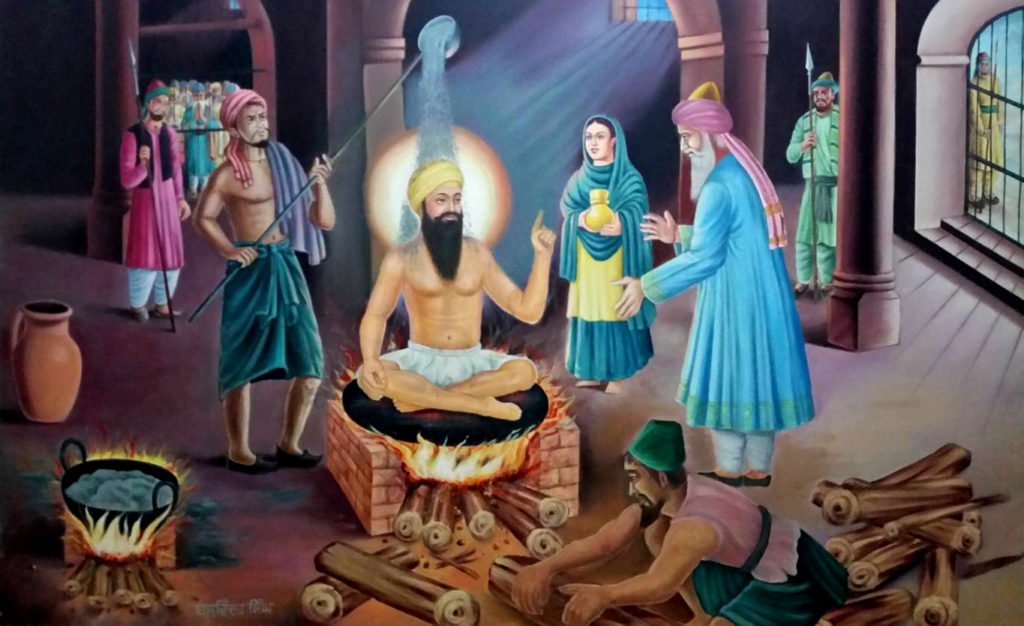
Hoping that Bhai Taru Singh Ji will help in arresting other Singhs if he embraces Islam, the Governor said to him, “All your sins can be pardoned if you become a Muslim and cut and give me those long hair of yours so that I may make a string of them for weaving my bed.” Bhai Taru Singh Ji said, “I shall keep my faith with these hairs, and you shall be controlled by my shoes, and with these you will die.” The Governor was beside himself with rage on hearing this. He got Bhai Taru Singh Ji mounted on rotating wheels of torture and then from a cobbler got his scalp removed, so that hair may not grow again. After that, he got him thrown in a ditch.

In the evening, the Governor could not pass urine. When the efforts of the physicians failed, the Governor sent Bhai Subeg Singh to seek pardon from Bhai Taru Singh Ji. He sent him to the leader of Dal Khalsa. The leader said, “The Governor can pass urine if he is hit on the head with the shoe of Bhai Taru Singh, but he will die before Bhai Taru Singh Ji.

The words of the Singh must be fulfilled. When the Governor took the shoe of Bhai Taru Singh Ji and hit his head with it, he was able to urinate. After surviving for 22 days with the help of that shoe, the Governor died on the 1st July, 1745 A.D. Bhai Taru Singh Ji gave up this mortal body after hearing about the death of the Governor.

A Gurdwara in Ludhiana district has been established to depict the suffering of such great Khalsa martyrs as Bhai Taru Singh Ji through pictures. This picture represents life size sculptures of various characters involved, depicting the glorious deeds of Bhai Taru Singh Ji.

Salute to Great Sikh Martyr Bhai Taru Singh Ji

Bhai Mani Singh Ji was born on the 10th March, 1644 A.D., at village Alipur, district Muzaffargarh. He came for a glimpse of Guru Har Rai Sahib Ji to Kiratpur with his father Mai Dass for the first time and stayed back for service of the Guru’s institution. He was married at fifteen to Bibi Sito, the daughter of Bhai Lakhi Rai. After the battle of Nadaun of 1690 A.D., Guru Gobind Singh Ji entrusted him with the service of Diwan. At the time of leaving Anandpur Sahib on the night of December 20-21, 1704 A.D., the Guru entrusted him to take the Guru’s consorts to Delhi. In May, 1705 A.D., at the call of the Guru he reached Gurdwara Damdama Sahib, where Bhai Mani Singh ji helped Guru Gobind Singh ji to create copies of Adi GranthTalwandi Sabo where the Guru got him to write the original manuscript of the Holy Granth and prepare some copies. In 1708 A.D., Mother Sunder Kaur Ji sent him from Delhi to Amritsar for service of the Sri Harmandir Sahib Ji.

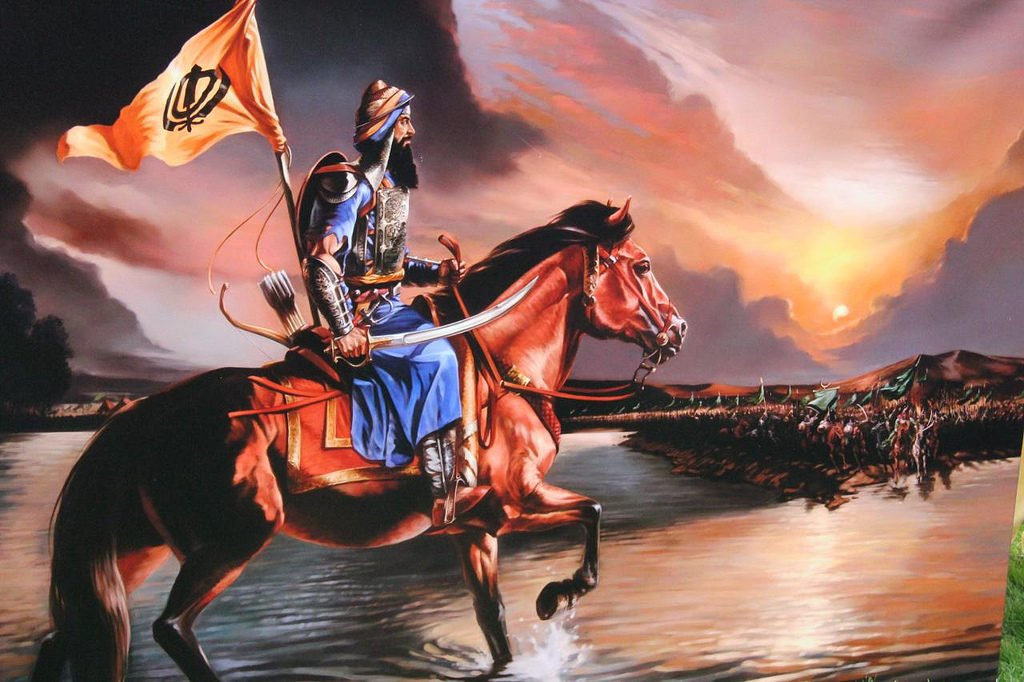
In 1735 A.D., Zakria Khan, the Governor of Lahore, ordered village headmen and landlords to finish Sikhs of their areas. He also appointed Diwan Lakhpat Rai, an enemy of the Sikhs, the administrator of Amritsar and Qazi Abdul Razak as the police chief. One day the Governor asked them, ‘What is the reason that no matter what the number of Sikhs we kill more are created ?” The Qazi replied, “Their Guru had put the elixir of life in the pool at Sri Harmandir Sahib. Whosoever bathes in that pool, gains eternal life.” Hearing this, the Governor ordered the filling up of the pool with sand and turned Bhai Mani Singh out from the service of Sri Harmandir Sahib.

Having been turned out from Sri Harmandir Sahib, Bhai Mani Singh Ji took up residence at the Sultan Wind’s well. One evening Qazi Abdul Razak came to Bhai Mani Singh and said, “My children are very ill. Medicines of local physicians and doctors are having no effect. Children wake up with nightmares.” Bhai Mani Singh went with him to his house. He sprinkled water from the pool of Sri Harmandir Sahib over the children and said to them, “Be not afraid during the night.” As the Lord would have it, the children stopped having nightmares. Qazi Abdul Razak stopped silting up the pool.

With the help of the Qazi, Bhai Mani Singh got permission from the Governor to allow Sikhs to have free access to Sri Harmandir Sahib for ten days on the occasion of Diwali of 1737 A.D., on the condition to pay tax of Rupees five thousand and so he wrote letters to invite the Sikhs. The Governor and Diwan Lakhpat Rai secretly planned to kill the Sikhs coming for the pilgrimage. Bhai Mani Singh Ji came to know of their plan in time. He sent messages to Sikhs not to come and so no fair was held.

The Governor called Bhai Mani Singh to Lahore and demanded the tax money. Bhai Mani Singh Ji said, “What for should I pay the money when the fair was not held ?” Then the Governor asked Bhai Mani Singh to embrace Islam. He refused. Qazi Abdul Razak ordered that Bhai Mani Singh be cut joint by joint. On the 14th June, 1738 A.D., he was martyred at Nakhas Chowk by cutting him joint by joint.


Salute to Great Sikh Martyr Bhai Mani Singh Ji

Sri Guru Hargobind Sahib Ji was born at village Guru Ki Wadali (district Amritsar) on Harh Vadi 7th (21 Harh), Samvat 1652 (19th June, 1595). He was extremely handsome and the only son of Guru Arjan Dev Sahib Ji and Mata Ganga Ji. He had one daughter Bibi Viro Ji and five sons: Baba Gurditta Ji, Suraj Mal Ji, Ani Rai Ji, Atal Rai Ji and (Guru) Tegh Bahadur Ji. Out of these, four sons passed away during the life of Guru Sahib and the fifth one, Sri Guru Tegh Bahadur Ji become Ninth Nanak in 1664. Sri Guru Hargobind Sahib Ji succeeded Guru Arjan Sahib in 1606, at the age of eleven years. After the martyrdom of Sri Guru Arjan Dev Ji, the moment was crucial for the Sikhs. Now for the first time, the Sikhs began to think seriously to counter the high-handedness of the mighty and theist Muslim Empire. Now a change had taken place in the character of Sikh Nation on the force of circumstances. Dialectically speaking, it was the need of the hour. Now the Sikh nation adopts both spiritual and political ways simultaneously. This policy suited well to all the social and economic segments of the Sikhs.

Sri Guru Hargobind Sahib Ji wore two swords, one of Spiritual Power – Piri and the other of Military Power – Miri. Now the Sikh became “Saint-Soldier.” Guru Sahib issued various letters advising the Sikhs to take part in the military training and martial arts. A Chronicler states that Guru Sahib kept seven hundred Cavaliers and sixty artillerymen. There was a band of Pathan mercenaries and Painda Khan Pathan was made its chief. Riding, hunting, wrestling and many others martial sports were introduced. And on the other hand the martial songs like ‘Vars’ were daily sung by the Dhadd-players in the court of Guru Sahib to inspire the Sikhs of heroic deeds. Abdul and Natha Mal were given the task in this respect. The Guru Sahib himself was healthy and strong in body and mind. He himself learnt the use of different weapons, besides riding wrestling and hunting.

In due course of action, Guru Sahib built a wall around Amritsar city and constructed a small fort named ‘Lohgarh’ on the out skirts of the city. Guru Sahib revealed Sri Akal Takht Sahib also known as Akal Bunga (Tuineless Throned) just in front of Sri Harmandir Sahib (Golden Temple) in 1609. This place became the seat of preaching and praying in due course of time. At this place, Guru Sahib used to gave sermons to the Sikhs and discussions were held on the problems faced by the Sikh nation. In this way the Sikhs were encouraged to settle their own disputes themselves, some martial sports were also performed in the open courtyard before the Akal Takht. This development further consolidated the Sikh nation. The Sikhs call Guru Sahib ‘Sachcha Patshah’ (True Emperor) and the Sikh Nation followed the judgments or decisions taken on Sri Akal Takht Sahib enthusiastically.

The emperor Jahangir did not tolerated this new policy of Guru Sahib and subsequently ordered to imprison him in the Gwalior Fort. Though the various reasons are also ascribed for the detention of Guru Sahib but the most suitable one seems to be that the Emperor Jahangir was falsely alarmed (about the military preparations by the Guru Sahib and Sikhs) by the same elements; enemies of the Sikh Nation, who were earlier responsible for the execution of Sri Guru Arjan Dev Ji. After receiving summons from Emperor Jahangir, Guru Sahib proceeded towards Delhi before making serious consultations about rest, with all the leading Sikh personalities including Mata Ganga Ji, Baba Budha Ji, Bhai Gurdas Ji, Bhai Jetha Ji and Bhai Sahlo Ji. Guru Sahib appeared before the Emperor Jahangir and was received by the latter with due respect. A debate on Sikh religion and Sikh doctrines held between Guru Sahib and Jahangir (having pre-tempered mind against Guru Sahib) but the emperor remained unimpressed and ordered for the imprisonment of Guru Sahib at Gwalior Fort. Guru Sahib was detained in the fort upto three years i.e. from 1609 to 1612. (There are divergent views regarding the detention period of Guru Sahib in the Gwalior Fort prison, but the most acceptable one seems to be three years from 1609 to 1612.)

Sain Mian Mir and Wazir Khan (Governor of Lahore) approached Emperor Jahangir on behalf of Guru Sahib and secured the releasing orders. When Guru Sahib met Jahangir immediately after his release, he insisted upon Jahangir for the release of other fifty-two Hindu Princes on his personal surety (These Princes were said to be the rebellious ones). The request was obliged and all the prisoners were released in 1612. Then the title of “Bandi Chhor Baba” was given to Guru Sahib and is still remembered by this name. Guru Sahib reached Amritsar on the occasion of Diwali. This was a big occasion for the Sikhs. It is said that Baba Budha Ji littered the earthen lamps throughout the Amritsar city. The Sikhs celebrated this occasion enthusiastically. From this day the Sikh Nation began to celebrate Diwali festival as Bandi Chhor Diwas” also.

Now the attitude of Jahangir and his empire towards Guru Sahib changed considerably and remained favorable and friendly till the death of Jahangir. It was the outcome of the noble interceding by the religious, secular and political personalities like Sain Mian Mir Ji, Nizam-ud-Din and the Governor of Lahore, Wazir Khan. Shortly after the release of Guru Sahib, the angry Sikhs overtook Chandu Shah (the main brain behind the execution of Sri Guru Arjan Dev Ji). They preceded him through the streets of Lahore. Chandu, like a mad dog, was pelted with stones, filth, and abuses thus put to death. A chronicle further states that “Death came to him as a relief and his body was thrown into the river Ravi.”

Shortly after the release from the Gwalior Fort and having cordial relations with the state, Guru sahib started to re-consolidate the Sikh Nation. He modified the concept of Charanamrit, (system of initiating people into the fold of Sikhism, which was being exploited by the selfish and corrupt Masands according to their own interests, when Guru Sahib was in Gwalior prison). He tried his best to dissuade Meharban (son of Pirthi Chand) from harbouring hostile designs against Sikhs and Sikhism.

Guru Sahib undertook Dharam Parchar tours to spead Sikhism. He started from Amritsar and covered thousand miles in India. In Punjab he visited Kartarpur and made it as headquarter of Sikh Nation in Doaba. He also visited several adjoining villages like Bara Pir, Mukerian and laid the foundation stone of Sri Hargobindpur town (the original name of this town was Gobindpura) near the river Beas in 1621. Guru Sahib also covered the ‘Malwa’ region of Punjab where the cult of Hindu Goddess and “Sakhi Sarwar” was fascination the lowly and downtrodden simple living people. Guru Sahib admitted the people of the villages: Darauli, Mehraj, Damru, Dabwali, Sidhwan, Sidhar, Lopo, Zeera, Katra and Gillan in the Sikhism. In other words the entire Malwa region embraced Sikhism and went a long way in integrating the Sikh Nation. This was a major achievement by Sri Guru Hargobind Sahib Ji.

Sri Guru Hargobind Sahib Ji visited an old Sikh religious parching centre Nanakmata (Gorakhmata) in the present Pili Bhit district of U.P. Guru Nanak Sahib established it. It is said that some Hindu Yogis ousted Almast Ji, (a pious Sikh preacher, deputed by Sri Guru Hargobind Sahib Ji to spread Sikhism) from the gurdwara and desecrated the place by cutting the holy and historical Peepal tree, under which earlier Sri Guru Nanak Dev Ji held discussions with the different sects of Jogis.

Guru Sahib reached Nanakmata along with some saint-soldiers. Seeing Guru Sahib on the scene, the Yogis fled away and never came back or interfered in the religious affairs of Almast Ji. Guru Sahib returned Amritsar via Darauli. Guru Sahib also held a detailed discussion on the spiritual and religious with a marathe Saint Ram Das Samrath, on the spiritual and religious issues in a very cordial atmosphere at Srinagar (Garhwal).

Guru Sahib visited Kashmir in 1620. Some chronicles state that Guru Sahib went there at the invitation of emperor Jahangir, because his personal physician’s advice for a natural climate and atmospheric change. It is also stated that Jahangir and his party paid a visit to Goindwal Sahib and reached Amritsar via Taran Taran. The emperor offered financial assistance for the construction of Sri Akal Takht Sahib, but Guru Sahib declined the offer politely.

On the other hand some Sikh source term the visit to Kashmir as a part of Guru Sahib’s preaching campaign. Guru Hargobind Sahib patronized one Sewa Das for preaching Sikhism. He and his mother Bhag Bhari served Guru Sahib with much zeal and devotion. Guru Sahib held a short meeting with his many devoted Sikhs and a preacher Kattu Shah (a converted Mohammedan). Guru Sahib visited Sialkot, Wazirabad, Mirpur, Bhimbar Rehran, Baramula, Uri and Muzafrabad. He appointed Bhai Garhia Ji to preach the Sikh religion. The large number of Kashmiris, both Hindus and Muslims embraced Sikhism due to the devoted and committed preaching by Guru Sahib. He married Bibi Marwahi Ji (Mata Mahadevi Ji), the daughter of a devoted Sikh couple Daya Ram Ji and Bhagan Ji at village Mandiali.

Guru Sahib returned home via Baramula and proceeded further to Gujarat where he met Saint Shah Daulla who appreciated Guru Sahib spiritual status and mode of living with splendor. Guru Sahib also visited Rai Bhoe-di-Talwandi (the birth place of Guru Nanak Sahib), Mange and Madai in Lahore district. He also visted Kurukshetra and established there a Sikh preaching centre (Now in Haryana State).

Guru Sahib spent the last decade of his life (from 1635 to 1644) at Kiratpur Sahib, which is situated in the hill state of Hadur (Nalagarh), founded by Baba Gurditta Ji (Guru’s son). It is said that Raja Tara Chand donated land for this purpose. Guru Sahib devoted his much time in reorganizing the Sikh Nation and updating the preaching centres by establishing a new system called Dhunas. Baba Gurditta Ji was made the incharge of religious affairs and he further appointed four head preachers area vice: Almast Ji, Phaul Ji, Gonda Ji and Baba Hansa Ji. Guru Sahib made reconciliation with Udasi sect headed by Baba Sri Chand Ji. Guru Sahib’s religious tours and preaching made the Sikhism more popular in different parts of India.

On the other hand Guru Sahib did not abandoned the mission of militarizing the Sikhs. Now for the first time in the Indian history since the invasion of Muslims, the Sikh Nation, under the supreme command of Sri Guru Hargobind Sahib Ji, prepared for the armed resistance. The tyranny and injustice of the Muslim theocratic state was opposed. This was only an imperative measure of defense. Guru Sahib converted the peaceful sect into a warlike community, ready to defend their interests with the swords and it was the need of the hour.

After the death of emperor Jahangir the policy matter of the new young emperor Shah Jahan changed considerably. The emperor took the notice of new converts to Sikhism from the Muslims. He ordered to destroy all the temples and Gurdwaras, which were under construction. The sacred Baoli of Guru Arjan Dev Sahib Ji in Dabbi Babar, Lahore (now in Pakistan) was desecrated and converted into a mosque. (Later Maharaja RanJit Singh re-excavated and re-established this Baoli. Again it was destroyed in 1947, by the unruly and fanatic Muslims mob). On the other hand the influence of Naqashbandis (a radical and fundamentalist order of the Muslim’s clergy).

In 1629 Mukhlis Khan was made the Governor to Lahore. He and Qazi Rustam Khan were best friends. According to some historical accounts Kaulan(Mata), a Hindu lady , as it is also signified to by the name Kaulan, was forcibly abducted by the Qazi Rustam Khan in her childhood and was made a maid servant . She was treated like a slave .At the young age; she came under the influence of the teachings of Sain Mian Mir Ji. She also began to take part in the religious sittings of Guru Sahib and became an ardent and pious follower of Guru Sahib.

On noticing this attitude of Kaulan Ji, Qazi became harsher towards her .How a Qazi, an extreme fanatic personality; tolerate her deep and devotional interest in Sikh religion? Because of Qazi’s harsh treatment she sought the help of Mian Mir Ji, who deputed his disciple Abdullah (Abdul Yar Khan) to escort Kaulan Ji safely to Amritsar, Where she was treated kindly by Guru Sahib and provided her a safe and separate lodging near a pond, (later it was converted into a tank by Guru Sahib and named it Kaulsar, after the name of Kaulan Ji). She was a pious disciple of Guru Sahib and an ardent follower of Sikhism. She began to arrange religious congregations on Sikhism and Gurbani, at her residence. Within a short span of time she became much popular among the Sikh masses. Thus she won the sympathy of the Sikhs who began to address her as Mata Kaulan Ji. She breathed her last on 4th July 1629 at Kartarpur (Jalandhar) while serving for the Sikh Nation.

When Shah Jahan succeeded the throne after the death of his father Jahangir, Qazi Rustam Khan lodged a complaint with the new emperor, who was incensed earlier by the fanatic Muslims and Hindus against the Sikh Nation and Guru Sahib. He obliged the complaint and revised his policy matter; earlier adopted by his father Jahangir towards Guru Sahib.The possible conflict out of charged circumstances was inevitable. Guru Sahib fought five battles during the regime of emperor Shah Jahan, and all were won. A small conflict of Rohilla near Sri Hargobindpur was fought in 1621. It was the first armed clash between the Faujdar of Jalandhar and Sri Guru Hargobind Sahib Ji.

Near the site of new town Hargobindpur, Bhagwan Das, a Khatri ‘Kirar’ contemplated his right of ownership on the land and with the help of some hired ruffians forcibly tried to dislodge the Sikhs, who were engaged in developing the new township. In the ensuing small clash Bhagwan Das and his most hired ruffians were killed. After this incident, Rattan Chand (son of Bhagwan Das) and Karam Chand (son of Chandu Mal) incensed the Faujdar of Jalandhar against Guru Sahib. Abdulla Khan the Faujdar of Jalandhar dispatched ten thousand soldiers. They were intercepted by the mighty and devoted Sikh Saint-Soldiers at Rohilla Ghat on the bank of the river Beas. The Mughal army met a crushing defeat by the hands of, but there was an immense loss of lives and material on the both sides. Besides Rattan Chand and Karam Chand, the Faujdar of Jalandhar, Abdullah Khan his two sons and five commanders were killed. Guru Sahib sacrificed Saint Soldiers like Mathura Bhat Ji (son of Baba Bhikha Ji), Bhai Nanu Ji, Bhai Saktu Ji, Bhai Jattu Ji, Bhai Pirana Ji, Bhai Paras Ram Ji, Bhai Jagannath Ji and Bhai Kalyana Ji.

The second and the most serious conflict between Guru Sahib and the Mughal forces were fought in April 1634. It started with the lifting of a royal hawk of the imperial army of Shah Jahan by the Sikhs, who incidentally were also hunting in the same territory aroud Gumtala Village near Amritsar. This led to a small violent conflict between the two parties. Guru Hargobind Sahib was not directly involved in his clash.

This incident enraged the emperor, Shah Jahan. He deputed Mukhils Khan with, 7,000 soldiers “to teach the lesson” to Sri Guru Hargobind Sahib Ji. The mini fortress of Lohgarh was attacked. The Sikhs though small in number, gave a stiff resistance. Guru Sahib and the whole family had to hurriedly move to Chabal, to solemnize the marriage of Bibi Veero Ji (the daughter of Sri Guru Hargobind Sahib Ji). The attackers had an upper hand over the Sikhs on the first day of the battle. They looted and plundered all the property and holy residence of Guru Sahib. On the next morning the Sikhs, after consolidating their position, retaliated and made a vigorous attack on the sleeping Mughal forces. Mukhlis Khan, the commander and most of his leading lieutenants were killed. Guru Sahib also suffered a heavy loss of life and property. This was the first armed clash between the Mughals and the Sikhs.

After this battle, Sri Guru Hargobind Sahib Ji retired to the semi desert wastelands of Bhatinda. (While leaving Amritsar for the Malwa region, Guru Sahib took Guru Granth Sahib with him but after meeting a halt for sometimes at Daroli he sent Guru Granth Sahib to Kartarpur along with the family). Soon after this, a tussle between Guru Sahib and Subedar of Lahore began over the two horses, which were forcibly snatched and taken into custody by the Mughal officials from the two devotees of Guru Sahib, at Lahore. This incident was informed to Guru Sahib. Bhai Bidhi Chand a daring disciple recovered the horses one by one from the royal stable. This dare devil act was considered an open threat to the authority of the Mughal Empire. The imperial forces (22000 troops) were dispatched towards the Lakhi Jungle under the command of Qammar Beg and Lalla Beg. Guru Hargobind Sahib had only three to four thousand warriors. The Sikh forces under the command of Rai Jodh and Kirt Bhatt camped near a water reservoir. The interception took place near Mehraj and Lahira villages. According to some chronicle (on 16th December 1634) the Sikhs waged a guerilla attack on Mughal forces at night, which resulted heavy causalities in the Mughal camp. The Sikhs routed and defeated the enemy. Guru Sahib lost 1200 Saint Soldiers including Kirt Bhatt Ji and Bhai Jetha Ji. On the other side Sameer Beg and his two sons Shams Beg and Qasim Beg were also killed. The Mughal forces fled to Lahore leaving behind the dead and wounded. The Sikhs did not intercept the fleecing enemy. Guru Sahib built a tank called Gurusar commemorating the victory. Near a village Nathane Guru Sahib faced another encounter with the Mughal forces but remained victorious.

After these successful encounters Guru Sahib retired at Kartarpur (Jalandhar) along with his warriors. Painda Khan Pathan a commander in Guru’s army and childhood friend, deserted him later and joined the Mughal camp after some altercation with the Sikhs and Guru Sahib on some petty issues. He and Kala Khan (brother of slain Mukhlis Khan), along with imperial army made an attack on Guru Sahib at Kartarpur on 26th April 1635. The Sikhs having a nominal strength of 5000, fought with rare courage and velour. Teg Bahadar Ji (Guru), Baba Gurditta Ji and Bhai Bidhi Chand Ji showed great feasts of bravery. Painda Khan and Kala Khan were killed. Several Sikh Saint Soldiers were also martyred.

After the battle of Kartarpur, Guru Sahib moved onwards Kiratpur Sahib, which was under the rule of Raja Tara Chand (a hill state chief). Again Guru Sahib’s entourage was suddenly ambushed by a contingent of royal forces under the command of Ahmed Khan in the village Palahi near Phagwara town on 29th April 1635. It caused considerable loss on the Guru’s soldiers. Bhai Dasa Ji and Bhai Sohela Ji (sons of Ballu Bhat, and grandsons of Mula Bhat) sacrificed their lives. Guru Sahib crossed the Sutlej River and reached Kiratpur Sahib where he established another spiritual and preaching center of the Sikh Nation. Here, Guru Sahib spent ten years of his life and breathed his last on Chet Sudhi 5th (6th Chet Samvat 1701) 28th February 1644 (some chronicle record the date as 3rd March, 1644). It is said that when Guru’s body was placed on fire, and as the flames rose high, a large number of Sikhs tried to burn themselves on the funeral pier. Har Rai Sahib (Guru) dissuaded them, but earlier two had jumped into the pier and were consumed by the fire. Before his death Guru Sahib nominated his grandson Har Rai Sahib (The second son of Baba Gurditta Ji) as his successor (Seventh Nanak).

Banda’s original name was Lachhman Dev. He was born in Kartik 1727 Bikrami Samvat, October-November 1670, four years after the birth of Guru Gobind singh. He belonged either to Kashmir or Punjab. He was a Rajput cultivator. By the time he was just turned 20, his astonishing mind was set on its task. He had a reputation of being a great hunter. One day he killed a doe which immediately delivered itself of two cubs which expired in his presence. The sight shocked him. He renounced worldly life and became a bairagi sadhu or a wandering hermit and ultimately settled at Nander on the banks of river Godavari in Maharashtra. He won great fame as a sorcerer under the name of Madhodas and commanded thousands of followers.

Guru Gobind Singh Ji went to his hermitage. Madhodas was away. The Guru ordered his disciples to kill a few goats of the Bairagi and cook meat there and then. The matter was reported to Bairagi. The Guru asked him who he was. Madhodas replied, he was Banda or Guru’s slave. The Guru inquired, if he knew whom he was talking to. He said he was none other than Guru Gobind Singh Ji. At that time Banda was 38 years old and Guru ji 42. The Guru encouraged him to give up his present way of living and resume the duties of a real Rajput. In few days the Guru held a durbar, conferred the title of Banda Bahadur on him and appointed him his military lieutenant to punish the Governor of Sarhind who had killed his two youngest sons, and was mainly responsible for the death of his two elder sons, his mother and thousands of Sikhs and Hindus. He was given a council of advisers of Five Sikhs who on their arrival in Punjab were to assure the Sikhs that Banda was Guru’s nominee and deputy to organize them in order to lead an expedition against Sarhind.

At a darbar held at Nander about the middle of September 1708, the Guru conferred the title of Bahadur on Banda and invested him with full political and military authority as his deputy to carry on the national struggle in the Punjab and to punish Wazir Khan of Sarhind and his supporters. He was supplied with a standard arrow and a drum as symbols of temporal authority. He was given an advisory council of five devoted Khalsa: Baj Singh, a descendant of the family of third Guru, Amar Das, his brother Ram Singh, Binod singh, who descended from Guru Angad Dev second Guru, his son Kahan singh and Fateh Singh. Twenty five soldiers were given to him as his bodyguard. A prescript called Hukumnamah or a letter of authority in the handwriting of the Guru instructing Sikhs to join Banda Bahadur in his national war against Mughal tyranny was provided. As an insignia of his temporal authority invested in him, Guru gave Banda Bahadur his own sword, green bow and Five arrows from his quiver. Three hundred Sikh cavaliers in battle array accompanied Banda to a distance of eight kilometers to give him final send off.

Banda on his journey, 1708-1709

The guru was severely wounded by a Pathan set on the Guru by Wazir Khan with the connivance of the court nobles. The dispatch of Banda to Punjab had infuriated Emperor Bahadur Shah. As a result of his intrigue the Guru passed away on October 7, 1708. Banda had not gone far when he heard the sad news. This did not discourage him. On the contrary it doubled his zeal and set the fire of vengeance ablaze in his heart. Distance between Nander and Hissar in current day Haryana is 1600 KMs. At the rate of 10-16 kms per day Banda should not have taken more than 100 days during his journey, but he actually took about a year. It means that he might have been frequently in hiding. The emperor should have instructed his officers to make short work of Banda and his party. That is why Banda traveled right across Maharashtra and Rajasthan, both of which were in revolt against the Mughals.

Banda in Current day Haryana, 1709

Narnaul:

Banda arrived at Narnaul. There he saw the complete destruction of Satnamis with his own eyes. His blood boiled on learning that entire sect of Satnamis, men, women and children, one and all had been wiped out of existence. It was here that Banda suppressed some dacoits and robbers. (this is mentioned in Sri Guru Panth Parkash of Giani Gian Singh, 345-46, 4th edition).

Hissar:

He was well received by Hindus and Sikhs as a leader of the nationalist movement and deputy of Guru Gobind Singh Ji. Liberal offerings were made to him in the cause of the country and dharam (religion and virtue) which he distributed among poor and needy.

Tohana:

Here Banda issued letters to Malwa Sikhs to join him in his crusade against Wazir Khan of Sarhind. Never perhaps in the history of Punjab did the circumstances of the time offered so fair a field to the ambition of a leader, conscious of great talents, and called to the command of a warlike people, only too eager to support him in any enterprise he might undertake. Banda directed his attention to the east towards Delhi. He wanted to leave Mata Sahib devi in Delhi and plunder the Government officials of the fertile area of Haryana. From Kharkhauda about 50 kms north-west of Delhi, Mata Sahib devi Ji was sent to Delhi under proper escort, to join Mata Sundari Ji, who was acting as head of the Khalsa. She might have resented Banda’s ignoring her for not having visited her at the capital before starting on his crusade.

Sonepat:

At Sonepat, 50 Kms North of Delhi, early in November 1709 Banda commanded about 500 followers. He attacked government treasury plundered it and distributed it among his retinue. This was his second success against the government and it considerably raised his prestige. By slow marches he advanced towards Sarhind.

Kaithal:

Near Kaithal, about 100 kms further North, Banda seized a Government treasury which was its way from the northern districts to Delhi. He kept nothing out of it for himself and gave it away to his rank and file.

Samana:

Samana, 50 kms farther North was the native place of Jalal-ud-did Jallad, the professional executioner, who had beheaded Guru Tegh Bahadur Ji, while his son had beheaded two younger sons of Guru Gobind Singh Ji. Ali Hussain who by false promises had lured Guru Gobind Singh Ji to evacuate Anandpur also belonged to Samana. It was an accursed place in the eyes of Sikhs. The entire peasantry of the neighborhood was now up in arms, and Banda’s following had risen to several thousands. Banda fell upon the town on November 26, 1709. The inhabitants were massacred in cold blood and town thoroughly squeezed. Samana was the district town and had nine Parganahs attached to it. It was placed under the charge of Fateh Singh. Samana was the first territorial conquest and the first administrative unit of Banda.

Then Kunjpura, Ghuram, and Thaska inhabited by Muslim Ranghars notirious for rape and rapine were destroyed. People who were born out of Muslim father and Hindu mother were called Ranghars. Damla was the village of Pathans who had deserted Guru Gobind Singh Ji in the battle of Bhangani, It was ravaged. Shahbad Markanda also fell to Banda.

Sadhaura:

Usman Khan , the chief of Sadhaura 25 kms distant, had persecuted Sayyid Budhu Shah for helping Guru Gobind Singh Ji in the battle of Bhangani. The muslim population maltreated the local Hindus. On the approach of Banda the leading Muslims gathered in a big and strongly built mansion. They were all massacred. This building came to be known as Katal Garhi. Banda attacked the town and destroyed it.

The contemporary historian Khafi Khan wrote: “In two or three months time four to five thousands pony-riders, and seven to eight thousand warlike footmen joined him. Day by day their number increased, and abundant money and material by pillage fell into their hands. Numerous villages were laid waste and he appointed his own police officers (thanedars) and collectors of revenue (Tahsil-dar-e-mal)”

Lohgarh:

The ultimate aim of Banda was to punish Wazir Khan and conquer Sarhind. It required time to consolidate his material and territorial gains. He also wanted to study military resources of Sarhind. He was anxious to see what steps government will take against him. He therefore established his headquarters, in the beginning of February 1710, at Mukhlispur situated in lower Shiwalik hills south of Nahan, about 20 KM from Sadhaura. His fort stood on a hill top. Two kuhls or water channels flowed at its base and supplied water to it. This fort was repaired and put in a state of defense. All the money, gold and costly material acquired in these expeditions were deposited here. He struck coins and issued orders under his seal. The name of Mukhlispur was changed to Lohgarh, and it became the capital of first Sikh state.

Banda ruled over the region bounded on the north by Shiwalik hills, on the west by river Tangri, on the east by river Jamuna, and in the south by a line passing through Samana, Thanesar, Kaithal and Karnal. He abolished the Zamindari System of land prevailing under the Mughals and declared the actual cultivators as the owners of land. Thus he established the peasant proprietorship, and won approbation and support of the overwhelming majority of the population. Khafi Khan says that Banda “issued orders to imperial officers and agents and big jagirdars to submit and give up their business.” So Guru Gobind Singh Ji’s dream of political sovereignty was realized within a year of his death.

Banda’s name struck terror into the hearts of lawless people, and thefts and dacoity became a thing of the past. “In all the paraganahs occupied by the Sikhs,” writes Irvine, “The reversal of previous customs was striking and complete. A low scavenger or leather dresser, the lowest of the low in Indian estimation, had only to leave home and join the Guru, when in a short time he would return to his birthplace as its ruler with his order and his order of appointment in his hand. As soon as he set foot within the boundaries the wealthy and well-born went out to greet him and with joined palms awaited his orders. Not a soul could disobey an order, and men who had often risked themselves in battlefields, became so cowed down that they were afraid even to remonstrate.

Invasion of Sarhind and establishment of first Sikh state

Banda’s Troops

Banda devoted three months in organizing his civil and military administration. Bahadur Shah was still away from Delhi. The Delhi Government had made no attempt to recover their lost territory from him. Wazir Khan of Sarhind was making his own preparations independently to meet the danger from Banda.

Banda’s troops consisted of two classes of people. The old Sikhs who had fought under Guru Gobind Singh Ji joined him purely to punish Wazir Khan. Eventhough Guru Gobind Singh Ji had only sent Banda Bahadur to punish those who had committed atrocities against Pir Buddhu Shah and sane saints, it was the love of Guru Gobind Singh Ji and Sahibzade’s that many Sikhs zealously to avenge the murder of the Guru Gobind Singh Ji’s young sons alligned themselves with Banda. They also wished to see the fulfillment of the Guru’s prophecy for Sikh sovereignty in Punjab. They numbered about five thousands. Another class of Sikhs of about the same number comprised of young men who wanted to punish and plunder the enemies of their faith. The third group of Hindu jats, Gujars and Rajputs of about five thousand were intent on plunder alone. Most of them were untrained, raw levies, not fully armed. Banda possessed no elephants, no good horses and no guns. His followers had matchlocks, spears, swords, bows and arrows. According to Khafi Khan the number of Sikhs had risen to thirty to forty thousands.

Wazir Khan’s Preparations

Wazir Khan had proclaimed a jihad or a holy war against Banda. He was joined by the Nawab of Malerkotla, all the other Muslim chiefs and jagirdars as well as Ranghars in large numbers. Majority of his soldiers were trained men. Wazir Khan’s own forces were six thousand horsemen, eight to nine thousand musketeers (burqandaz) and archers, and with these about ten guns of artillery and many elephants. In addition there were about ten thousand Ghazis. The total number of their troops was about thirty thousands.

Banda advanced from Lohgarh and halted at Banur, near Ambala, 14 Kms from Rajpura. The muslims of that town used to seize cows and oxen of Hindus and slaughter them in their presence. Banda sacked it, and then went towards Sarhind.

The Battle of Sarhind, May 12, 1710 A.D.

The battle was fought at Chhappar Chiri, 20 kms from Sarhind. On the Mughal side Sher Muhammad Khan, Nawab of Malerkotla was the leader of the right wing. Wazir Khan was in command of the center. Suchanand, chief secretary of nawab was put on the left. On the Sikh side, Baj singh Bal a jutt of village Mirpur in Patti distt. of Amritsar, headed right wing.Binod Singh (descendent of Guru Angad Dev ji) headed the left wing while Banda commanded the center facing the Wazir Khan’s army. Shouts of Sachcha Padishah, Fateh Darshan (Sat Sri Akal was changed to Fateh Darshan by Banda), Sat Sri Akal, Akal, Akal, and ya ali, rent the sky. Suchanand could not withstand the ferocity of Baj singh and soon vanquished and fled away. The artillery fire of the Mughals told heavily on the plunderers in Banda’s camp. They were equally divided between Baj singh and Binod singh’s forces. Sher Mohammed Khan was about to overpower Binod singh’s wing when he was suddenly struck by a bullet and was instantly killed. His men immediately dispersed. Wazir Khan was rushing upon Banda who stuck fast to his ground and discharged arrows relentlessly. There a bloody battle was going on. Baj singh and Binod singh now joined Banda. Banda and the Sikh leaders now converged on Wazir Khan and he was killed.

Wazir Khan’s death is variously described. Khafi Khan says that he was struck by a Musket ball. Mir Mohammed Ahsan Ijad says that Baj singh rushed upon Wazir Khan. Wazir Khan threw his spear at Baj singh. Baj singh caught hold of it. He flung the same spear upon Wazir Khan. It struck the forehead of his horse. Wazir Khan discharged an arrow which hit Baj singh’s arm. He then rushed upon him with his sword. At this juncture Fatah singh came to the rescue of Baj singh. His sword cut the Khan from shoulder to the waist.

Pursuit of fugitives:

Wazir Khan’s head was stuck up on a spear and lifted high up by a Sikh who took his seat in the deceased’s howdah (a seat atop of elephant). The Sikhs with one voice and in wild excitement raised the sky-rending shouts of Sat-Sri-Akal. The Sarhind’s troops on beholding the Nawab’s head took alarm, and trembling fled helter skelter in dismay and despair. The Sikhs fell upon them and there was a terrible carnage. Sikhs reached Sarhind by nightfall. The gates of the city were closed. The guns mounted on the walls of the fort commenced bombardment. The Sikhs laid siege to the place. They took rest in the night. Wazir Khan’s family and many Muslim nobles fled to Delhi at night.

By next afternoon Sikhs forced open the gates and fell upon the city. The Government treasury and moveable property worth two crores fell into Banda’s hand which was removed to Lohgarh. Several Muslims saved their lives by embracing Sikhism. Dindar Khan son of Jalal Khan Rohilla became Dindar Singh. The official newswriter of Sarhind Mir Nasir-ud-din changed his name to Mir Nasir singh. (Yar Mohammand, Dastur-ul insha, page 37, Persian)

Province of Sarhind occupied

Entire province of Sarhind consisting of twenty-eight paraganahs and extending from Satluj to the Jamuna and from the Shiwalik hills to Kunjpura, Karnal to Kaithal, yielding 52 lakhs (1 lakh = 100,000 Rupees) annualy came into Banda’s possession. Baj Singh was appointed governor of Sarhind. Ali singh was made his deputy. Their chief responsibility was to be on guard against the Mughal troops from Lahore and Jammu. Fatah singh retained charge of Samana. Ram singh, brother of Baj singh became chief of Thanesar. Binod singh in addition to his post of the revenue minister, was entrusted with the administration of Karnal and Panipat. His main duty was to guard the road from Delhi. Banda retired to his capital at Lohgarh. His era began from May 12, 1710, the date of his victory in the battle of Sarhind. The Zamindari system was abolished in the whole province at one stroke.

Banda advances towards Lahore, June 1710

Having set up administrative machinery, Banda advanced from Sarhind to Malerkotla. The town was saved for a ransom of two lakhs on the recommendation of Kishan Das Banya, an old acquaintance of Banda. From there he marched to Morinda. He chastised the Brahmins and Ranghars who had made over Guru Gobind Singh Ji’s mother and his two youngest son to Wazir Khan. Then he visited Kiratpur and Anandpur to pay homage to shrines. He took Hoshiarpur and Jalandhar and carried fire and sword everywhere. Banda crossed the Beus and fell upon Batala. Then, he went on a pilgrimage to Dera Baba Nanak. At Amritsar Banda made large offerings. He invited young men to embrace Sikhism promising remission of land revenue and other rewards. Then many from the area of Majha joined the Khalsa. Banda marched towards Lahore. Sayyid Islam Khan, the Governor mounted guns on the walls of city. Banda laid a siege, but was unable to force upon the walls of fort. Lahore must have fallen, but Banda was in hurry to look after his government.

Thus entire city remained safe owing to its fortifications. But the entire suburbs for miles around was completely devastated. In this campaign Banda was joined by thousands of low caste Hindus who came into the fold of Khalsa.

Torture and execution of Banda Bahadur by Mughals

Banda Singh’s rule, though short-lived, had a far-reaching impact on the history of the Punjab. With it began the decay of Mughal authority and the demolition of the feudal system of society it had created. Banda Singh increasing influence roused the ire of the Mughal emperor, Bahadur Shah, who journeyed northwards from Deccan to punish Sikhs. Instructions were issued to the governors of Delhi and Oudh and other Mughal officers to march towards Punjab. Prohibitory laws against Sikhs were passed. Fearing that some Sikhs might not have smuggled themselves into the royal camp disguised as Hindus, Bahadur Shah ordered all Hindus employed of imperial forces to shave off their beards. Emperor Bahadur Shah’s order, issued on December 10, 1710 was a general warrant for the faujdars to “kill the worshippers of Nanak, i.e. Sikhs, wherever they are found. (Nanak Prastan ra Har ja kih bayaband baqatl rasanand)” Banda was chased out of Every corner of Punjab and he took refuge in the Shivalik hills.

He got married to daughter of one of the hill chiefs and it was few years before Mughals could trace him down . He again started his campaigns against Mughals and came out of hills to the plains of Punjab. But was overwhelmed by the superior numbers of Mughal forces. As reported to emperor Bahadur Shah on April 28th 1711, (Akhbarat-i-darbar-i-mualla) , “The wretched Nanak-worshipper (Banda Singh) had his camp in the town of Kalanaur (District Gurdaspur). He has promised and proclaimed: “I do not oppress the Muslims.” Any muslim who approaches him, he fixes a daily allowance and wage, and looks after him. He has permitted them to recite khutba and namaz. As such five thousand Muslim have gathered round him.

The massive imperial force drove the Sikhs from Sirhind and other places to take shelter in the fort of Lohgarh in the hilly region. “It is impossible for me,” says Khafi Khan a muslim historian of that time, “to describe the fight which followed. The Sikhs in ther faqir’s dress struck terror into the hearts of the royal troops. The number of casualties among the latter was so large that for a time it appeared as if they were going to lose.”

Further reinforcements arrived and sixty thousand horse and foot closely invested Banda’s hill retreat. For want of provisions, Sikhs were reduced to rigorous straits. They killed their horses for food, and when they could stand up to the enemy no longer, they made desperate nightly sally to escape into the hills of Nahan. Banda was far from vanquished. A hukamnamah, issued by him to his followers within a fortnight of his leaving the fort of Lohgarh, showed the spirit which swayed the Sikhs during those arduous times. The following is an English version of Banda Singh’s letter.

Deg O Teg O Fateh o nusrat bedirang
Yaft Az Nanak Guru Gobind Singh

The kettle and the sword (Symbols of charity and power), victory and blessing have been obtained from Guru Nanak-Gobind Singh Ji. God is one! Victory to the Presence!! This is the order of Sri Sachcha Sahib (The great master) to the entire Khalsa. The Guru will protect you. Call upon the Guru’s name. Your lives will be fruitful!. You are the Khalsa of the great immortal God. On seeing this letter, repair to the presence, wearing five arms. Observe the rules of conduct laid down for the Khalsa. Do not use Bhang, tobocco, Poppy, wine, or any other intoxicant…Commit no theft or adultery. We have brought Satyug (the golden age) Love one another. This is my wish. He who lives according to the rules of Khalsa shall be saved by the Guru.

Sikhs came out of their mountain haunts to recover their lost territories and once again occupied Sadhaura and Lohgarh. Farukh Siyar, who came to the throne of Delhi in 1713, launched against them the sternest proceedings that political authority stirred with a fanatical religious zeal could devise. They were hounded out of plains of Punjab and their main column, under Banda Singh about 4,000 men was subjected to most stringent siege at the village of Gurdas-Nangal, about six kilometers from Gurdaspur.

Gurdas Nangal was an epic of purest heroism in face of heavy odds. According to Muhammad Qasim, the Muslim author of Ibratnamah, who has given an eyewitness account of this campaign, the “brave and daring deeds (of the Sikhs) were amazing. Twice or thrice a day, some forty or fifty of them would come out of their enclosure to gather grass for their animals, and, when the combined forces of the emperor went to oppose them, they made short work of the Mughals with arrows, muskets and small swords, and then disappeared. For eight months the garrison resisted the siege of 100,000 Mughal troops under the gruesome conditions.

Quite apart from the daring exploits of the ordinary Sikh soldier, there were strong rumours in the Mughal camps that Banda Singh had magical powers, and could transform himself into many shapes to escape captivity. Most of the Mughal commanders were afraid of a face to face encounter with Banda, and were conslantly pushing their Qazis and Mullas to the front to offer prayers to counter the spells of the enemy. Abdus Samad Khan openly prayed that Banda escaped from there, so that the whole business could be disposed off on any excuse. Only fresh orders from the Emperor to capture 13anda dead or alive kept him at his task. He was taking new measures everyday to tighten the siege, to starve the delenders to submission. Qamar-ud-Din’s forces were holding one half of the circle and his own forces were on the other half.

This siege dragged on for eight months. Towards the end, an unfortunate dispute arose between Banda Singh and one of his most trusted advisers Baba Binod Singh. This man along with Baaj Singh and three others made up the war council that Banda was supposed to consult in any difficult situation. Binod Singh advised the evacuation of the fortress, but for some reasons of his own, Banda wished to fight it out there. Binod Singh was senior in age, and when this difference of views flared up into an open quarrel, Banda agreed to let Baba Binod Singh take his men out of the Fortress. Binod Singh and his supporters then charged out of the fortress and escaped.

Towards the end of November 1715, the remaining defenders were running out of ammunition and food. They were trying to exist on boiled leaves and the bark of trees, and were gradually reduced to mere skeletons. Then on 17th December, 1715, Abdus Samad shouted across the separating moat, that he would not allow any killing by his men, if Banda opened the gate to the fortress. When Banda ordered the gate be opened, the Mughals rushed in to spear or stab as many as three hundred of the half-dead and helpless defenders. About 200 were captured alive and handcuff’ed in twos. Banda Singh had chains round his ankles and his wrists, and was then locked in an iron cage. The Mughals were still afraid that he might escape and so they placed a guard on each side of the cage with swords drawn and the cage was placed aloft an elephant, which led the procession, which paraded through Lahore, hefore proceeding towards Delhi. Zakaria Khan, the son of the Lahore Governor, then took charge. and in order to give the Emperor a bigger present, he ordered his men to lop off more heads of Sikhs that they caught on the way, and he loaded them on to the carts that carried the 300 from (Gurdas Nangal). The rest Sikhs around 740 Sikhs along with Banda Singh were taken to Lahore, and thence to Delhi. The cavalcade to the imperial capital was a grisly sight. Besides 740 prisoners in heavy chains, it comprised seven hundred cartloads of the heads of the Sikhs with another 200 stuck upon pikes. On 26th Fehruary, 1716, this procession neared Delhi, and Farukh Siyar ordered his Minister Mohammed Amin Khan to go out to receive them and to prepare them for a suitable display in the town. On the 29th February, the citizens of Dclhi had lined the streets in full force, to get a good sight of the show. E:irst marched 2,000 soldiers each holding a Sikh head impaled on his upright spear (so many extra had been collected on the way). Next followed Banda Singh’s elephant. A gold-laced red turban was placed on his head, and to add further mockery to his plight, a bright printed scarlet shirt was slipped on his body. Then carne 740 prisoners (500 had been collected on the way). These men were chained in pairs and thrown across the backs of camels. Their faces were blackened, and pointed sheepskin or paper caps were clapped on their heads. Behind this line came the Mughal Commanders, Mohammed Amin Khan, his son Kamar-ud-Din Khan, and his son-in-law Zakaria Khan. Their army men lined both sides of the streets.

However humiliating their plight, there were no signs of dejection or remorse on the faces of these Sikhs. In the words of Mohammed Harisi, author of the Ibratnama, who was on the spot that day: “The crowds were pressing forward to get a better view Many were enjoying the sight and taking hillarious jibes at them. But nothing changed the air of calm and resignation on the faces of those Sikhs. There were no signs of bitterness or dejection anywhere. They appeared to be happy with their lot, and were actually joined in groups singing their Guru’s hymns. If anyone remarked that they were being punished for their sins, their retort was: ‘No, it is all according to God’s Will ?”‘ When we see the list of weapons captured from them at Gurdas Nangal we are really amazed at what they could do with so little. This is the list as supplied by Kanwar, the author of the Tazkrah: 1,000 swords, 217 small swords, 114 daggers, 278 shields, 173 bows, and 180 rifles. In spite of this scanty material they could have continued defying the Mughal might a long long time, if only their supplies of food had not run out.

C.R.Wilson, a Bengal civilian, has given in his Early Annals of the English in Bengal the following description of the entry of the Sikh captives into Delhi:

Malice did its utmost to cover the vanquished with ridicule and shame. First came the heads of the executed Sikhs, stuffed with straw, and stuck on Bamboo’s, their long hair streaming in the wind like a veil, and along with them to show that every living thing in Gurdaspur had perished, a dead cat on a pole. Banda himself, dressed out of mockery in a turban of a red cloth, embroidered with gold, and a heavy robe of brocade flowered with pomegranates, sat in an iron cage, placed on the back of an elephant. Behind him stood a mail-clad officer with a drawn sword. After him came the other 740 prisoners seated two and two upon camels without saddles. Each wore a high foolscap of sheepskin and had one hand pinned to his neck, between two pieces of wood. At the end of the procession rode the three great nobles, Muhammad Amin Khan, sent by emperor to bring in prisoners, Qamr-ud-Din, his son, and Zakariya Khan, his son-in-law. The road to the palace, for several miles was lined with troops and filled with exultant crowds, who mocked at the teacher (Guru) and laughed at the grotesque appearance of his followers. They wagged their heads and pointed the finger of scorn at the poor wretched a they passed. “HU! HU! infidel dog worshippers your day has come. Truly, retribution follows on transgression, as wheat springs from wheat, and barley from barley!! ” Yet the triumph could not have seemed complete. Not all the insults that their enemies had invented could rob the teacher and his followers of his dignity. Without any sign of dejection or shame, they rode on, calm, cheerful, even anxious to die the death of martyrs. Life was promised to any who would renounce their faith, but they would not prove false to their Guru, and at the place of suffering their constancy was wonderful to look at. ‘Me deliverer, kill me first,’ was the prayer which constantly rang in the ears of the executioner.

Khafi Khan illustrates the resolute will and complete devotion to their cause displayed by those Sikhs by telling us about one young prisoner who was about to be called up from the line. This boy had been newly married and had been hauled in by Zakaria Khan’s soldiers on the way, only to swell the number of captives for the pleasure of Farukh Siyar. He was the only son of his widowed mother, who had hurried to plead her case before the Emperor. She said that her son had been beguiled into joining the Sikh bands, but was not a Sikh at heart. On that ground, the Emperor wrote out the order of pardon for the boy, and thc mother had hurried with that note and handed it to the officer-in-charge of the executions. The officer read out the pardon and the youth shouted out, “My mother has lied. I am a Sikh of my Guru in body and soul. Do not separate me from my departed friends. Please hurry so that I can join them now.” Saying that he left the guards dumbfounded and rushed away to the front of the queue again. He lowered his head before the executioner and refused to budge until the sword had descended and cut him into two.

That gory scene was enacted for seven days until all the ordinary captives had been disposed off. According to Mohammed Harisi, their bodies were loaded on wagons and taken out of town to be thrown to the vultures. The heads were hung up on trees or on poles near the market-place to be a lesson to all rebels. Not one from the 700 odd men had asked for pardon. The jailors next turned their attention to the 20 odd sardars, including Baaj Singh, Fateh Singh, Ahli Singh and Gulab Singh (of Lohgarh fame). These men were tortured to the extreme and were asked to divulge the place where they had buried all the treasures that had been looted from Sirhind, Batala and other towns during their better days.

Failing to get any clues after three months, they prepared to put an end to their lives on Sunday, 9th June, 1716. Banda’s cage was again hoisted on top of an elephant, and he was dressed in mock attire of an emperor, with a colourful red pointed turban on his head. His 4 year old son Ajai Singh was placed in his lap. The twenty odd sardars marched behind the elephant and this special procession then passed through the streets of Delhi, and headed for the Kutub-ud-din mausoleum of Bahadur Shah, near the present Kutab Minar. On reaching that graveyard, the captives were again offered a choice of two alternatives: conversion to Islam or death. Needless to say all chose death. The Sikh sardars were subjected to tortures before being executed. Their heads were then impaled on spears and arranged in a circle round Banda who was now squatting on the ground. There were hundreds of spectators standing around watching this scene. Here they made him paraded around the tomb of late emperor Bahadur Shah and put him to a barbarous death.

Banda Singh was then given a short sword and ordered to kill his own son Ajai Singh. As he sat unperturbed, the cxecutioner moved forward and plunged his sword into the little child cutting the hody into two. Then pieces of flesh were cut from the body and thrown in Banda’s face. His liver was removed and thrust into Banda Singh’s mouth. The father sat through all this without any signs of emotion. His powers of endurance were to be tested still further. But before that, Mohammed Amin Khan, who was standing near spoke as follows: “From your manner so far you appear to be a man of virtue, who believes in God, and in doing good deeds. You are also very intelligent. Can you tell me why you are having to suffer all this here ?”

Banda’s reply was, “When the tyrants oppress their subjects to the limit, then God sends men like me on this earth to mete out punishment to them. But being human, we sometimes overstep the laws of justice, and for that we are made to pay whilst we are still here. God is not being unjust to me in any way.”

The executioner then stepped forward and thrust thc point of his dagger into Banda’s right eye, pulling out thc eyeball. He then pulled out the other eyeball. Banda sat through all this as still as a rock. His face gave no twitch of pain.

The cruel devil then took his sword and slashed off Banda’s left foot, then both his arms. But Banda’s features were still calm as if he was at peace with his Creator. Finally they tore off his flesh with red-hot pincers, and there being nothing else left in their book of tortures, they cut his body up into a hundred pieces, and were satisfied. (These details of the torture are given in full, by the following writers: Mohammed Harisi, Khafi Khan, Thornton, Elphinstone, Daneshwar and others).

The ambassadors of the East India company, John Surman and Edward Stephenson, who were in Delhi then and had witnessed some of these massacres, wrote to the governor of Fort William: “It is not a little remarkable with what patience Sikhs undergo their fate, and to the last it has not been found that one apostatized from his new formed religion. “

On June 9th , came the turn of Banda Singh. Harshest torments had been reserved for him. His eyes were pulled out and his hands and feet chopped off. His flesh was torn with red hot pincers. The end came, mercifully for him with the executioner’s axe falling on his neck. With his end Sikhism did not die on the contrary Sikhism came out strong and the torch of Banda Singh Bahadur was carried with new Warriors like Nawab Kapur Singh Virk, Sardar Budh Singh, Sardar Charat Singh, Baba Deep Singh ji Shaheed, Sardar Jassa Singh ji Ahluwalia, Maharaja Ranjit Singh, Hari singh Bhangi, etc.

Manas ki jaal sabhai ekai pehchaanbo is the Guru Gobind Singh Ji’s message. which emphatically states “men may call themselves Hindus, Muslims, Emams and Shaffies, but I see them all belonging to one race mankind.” Guru Gobind Singh Ji had given Banda specific orders to punish those who had persecuted good saints like Pir Budhu Shah. He had not mentioned any revenge on those who had executed his own young boys at Sirhind. Hc had expected Bahadur Shah to fulfil his promise to punish those who had committed atrocitics on good men, but had parted company from the Emperor completely disappointed. Banda Singh was then taught to bring to reality the Guru’s own dream:


Salute to great Sikh Warrior Sardar Banda Singh Bahadur who gave all but not his beliefs

Chandu Shah, a Banker of Delhi, wielded a lot of influence at the Mughal court. He was looking for a suitable groom for his daughter. He was originally from Panjab and was keen that it should be a Panjabi youth. His emissaries saw Guru Hargobind, son of Sri Guru Arjan Dev Ji at Amritsar. Agents informed about Sri Guru Hargobind to Chandu Shah. He however, had the ego of a spoiled rich man. He couldn’t imagine giving his daughter in marriage to anyone below his status. He said “At best Arjan lives on the offerings of his followers,” he objected “he has no social or  political position”. So proposal was accordingly dropped. Some Sikhs came to know about the Chandu Shah’s remarks and they conveyed them duly to the Guru. As it happened, agents continued to search everywhere for a suitable match but couldn’t find anywhere. Chandu Shah’s wife felt that Guru Hargobind was a good match for her daughter. Chandu Shah thus sent his agents to Guru asking them to finalize this proposal of marriage. Guru’s Sikhs wanted Guru to decline this offer and Guru obliged his Sikhs by declining to accept the marriage asking that “Daughter of such rich household was not fit for the house of a Saint “Dervesh” like me”. Chandu Shah could not imagine that the hand of his daughter could be refused by anyone. In a fury of temper, he decided to avenge himself on the Guru for the indignity hurled on him.

Chandu Shah and Guru’s enemy Prithi Chand Sodhi, complained to Emperor Akbar that Adi Granth, which Guru Arjan had compiled has derogatory remarks against Muslims and Hindus. Emperor Akbar asked for Guru Arjan Dev Ji. Guru Arjan Dev Ji send Bhai Gurdas and Baba Buddha Ji to the Mughal court along with the copy of Holy Granth. When the Holy Book was opened, the first hymn written by Guru Nanak Dev Ji was read was

from clay and light God created the world.
the sky,the earth, trees and water are made by Him.

Emperor heard it and was fully satisfied. However, Chandu Shah complained that Bhai Gurdas had read this hymn from memory and not from Guru Granth Sahib Ji, so he got someone named Sahib Dayal from Town and made him read the Granth. This time hymn was

You don't see God who dwells in your heart,
And you carry about an idol around your neck

Emperor was delighted to listen to the hymn and exonerated Arjan and Sikhs of any wrong doings against any community. He bestowed honour of robes on Baba Buddha and Bhai Gurdas Ji and sent them back.

Akbar died soon thereafter and was replaced by his son, Prince Salim, aka Jahangir. Jahangir was a debauched, drunken, fanatic who believed in whatever his Sunni Mullah told him. He has left his kingdom on the whims of his queen Noorjahan and was always either drunk or hunting in the wilderness. Chandu Shah complained to Jehangir again that Granth has some derogatory references to Islam and Hinduism. Jehangir issued orders for Guru Arjan Dev Ji to revise Holy Granth and remove any references to Islam and to pay two hundred thousands rupees as fine. The Guru told Mughal emperor Jehangir that his money was the sacred trust of the Sikh community and the hymns in the Holy Granth were revelation in praise of God: no one dare alter them. King was on his way to Kashmir. He was in hurry, so he asked Murtza Khan to deal with Guru in the way he thought was best. Chandu Shah approached and poisoned his ears, urging him to extract the fine levied by the Emperor.

Murtza khan ordered the Subedar of Lahore to arrest Guru Arjan Dev Ji. Guru Arjan Dev Ji were arrested and put in Jail at Lahore. When Sikhs heard that Emperor wanted two hundred thousand rupees, they started collecting money to pay the fine, Guru Arjan Dev Ji forbade them to pay the fine, citing it as against the ethics. Meanwhile, Qazi gave an injunction ordering the Guru Arjan to be tortured to death if he didn’t agree to expunge the so-called derogator references to Islam in Adi Granth or he converts to Islam.

Guru was made to sit on a red hot iron sheet. They poured burning hot sand on his body. He was given a dip in boiling water. As the Guru was being persecuted thus Mian Mir, the Muslim sufi divine of Lahore, who had laid the foundation stone of the Golden Temple at Amritsar, came and begged the Guru to allow him to use his mystic power to undo those who were responsible for the suffering inflicted upon him. The Guru heard Mian Mir and counselled patience. He told him that one must accept the will of God; not a leaf moves if God doesn’t ordain it. When Chandu’s daughter-in-law heard about it, she bribed the jailor and came to the prison with sherbet and other delicacies to serve the Guru. The Guru declined to accept anything from Chandu’s house, but blessed the lady for her faith and devotion.

The Guru was tortured for five long days. When the tyrants found him bearing all the agony with perfect equanimity, they became helpless. They were at a loss and didn’t know what to do. At this, the Guru asked for a bath in the river Raavi by the side of the Mughal fort in which he was imprisoned. Thousands of his followers watched the Guru walk to the river with tears in their eyes. His bare body glistened with blisters. There were blisters on his feet and he couldn’t even walk properly “Sweet is Your will, O God; the gift of your Name alone I seek.” said the Guru again and again.

ਤੇਰਾ ਕੀਆ ਮੀਠਾ ਲਾਗੈ ॥
ਹਰਿ ਨਾਮੁ ਪਦਾਰਥੁ ਨਾਨਕੁ ਮਾਂਗੈ ॥

As he reached the river, he bade farewell to the bewailing multitude and walked into the water as serene and as calm as ever. It is said that it was the last glimpse his devotees had of the Guru. He never came out of the river. River was flowing at very fast pace and with blisters on body, it was very tough for Guru to hold on against the tide. The tide bore him in her longing lap and he was gone forever. Guru Arjan was only forty-three years old at the time of his supreme sacrifice on 30 May 1606. Sikhs celebrate that day every year with Sweetened buttermilk Stalls called Chhabeel all over Panjab.

Thus, a magnificent life was brutally cut short at the hands of tyranny. The way in which Guru Arjan Dev Ji gave his life for the values that he cherished is of far-reaching significance. With his martyrdom, the attitude of the Sikhs toward life changed. Emulating their Guru, they would readily give their lives for any cause dear to them, whether it was a fight with the bigoted Mughals for the protection of their faith, or with the British for the freedom of the country, or even Congress after Independence for the Panjabi-speaking State. Guru Arjan’s humility is almost unparalleled. There was no trace of self; he emphasized with actions that, more important than the Guru, were the Guru’s Sikhs. Since the Delhi Sikhs did not want the Guru’s son to be married to Chandu Shah’s daughter because of his arrogance, The Guru respected their wishes, even when his life was at stake.

Guru Arjan Dev Ji has left a massive volume of 2218 hymns marked their musicality and richness of imagery. They have continued to be popular with the Sikh musicians’ generation after generation. He wrote in a simple, conversational language, reflecting the various stages of the spiritual journey of the human soul. His giant personality is the Sukhmani Sahib. The hymn of Peace, is a long poem, ranking next only to the Jap Ji Sahib of Guru Nanak Dev Ji in popularity with the devout. Though it doesn’t form part of the essential set of five hymns enjoined upon the Sikhs to be recited every day, the Sukhmani Sahib is recited by many devotees every morning and also at the hour of anxiety in the family. In Guru Arjan Dev Ji we have the culmination of all that Guru Nanak Dev Ji and the three Gurus following him stood for. They combined in themselves the best of Islam and Hinduism. Rather than alienating anyone, they strove for mutual understanding. Venerated equally by the Muslims and the Hindus, they were peace-loving, devoted to meditation and prayers, and service of their fellow-beings. In Sikhism, the stress is on universal truth. All rites, rituals, and worship of god and goddesses have been dispensed with. Sikhism comprises love of God and service of humanity.
Waheguru Ji Ka Khalsa, Waheguru Ji Ki Fateh